
Lesson

Project Goal:
Identifying sources of water pollution
Teacher’s Guide:
Divide students into groups of 4–5.
Before the experiment, discuss with the children the questions: “Why does water get polluted?” and “How can polluted water be cleaned?”.
Before starting the practical part, introduce students to all necessary materials and provide them.
Give a short briefing on safety rules during the work.
At the beginning of the lesson, explain the PBL (Project Based Learning) rubric to the students. 4K Skills (Critical Thinking, Collaboration, Creativity, Presentation).
Theoretical Part
Water is the most important natural resource on Earth. It is essential for the life of humans, animals, and plants. However, nowadays water pollution has become a major environmental issue. Sources of water pollution include household waste, industrial emissions, fertilizers and pesticides used in agriculture, as well as vehicle exhaust.
When polluted water enters rivers, lakes, or underground water, the natural balance is disturbed. Pollutants lower the quality of water and harm the health of living organisms. Therefore, preventing water pollution and observing how it passes through natural filters is an important experiment.
In this project, students will create a model of a “rain garden” with their own hands and see how water gets purified as it passes through different layers. This way they will understand the natural filtration process in the water cycle.
Practical Part
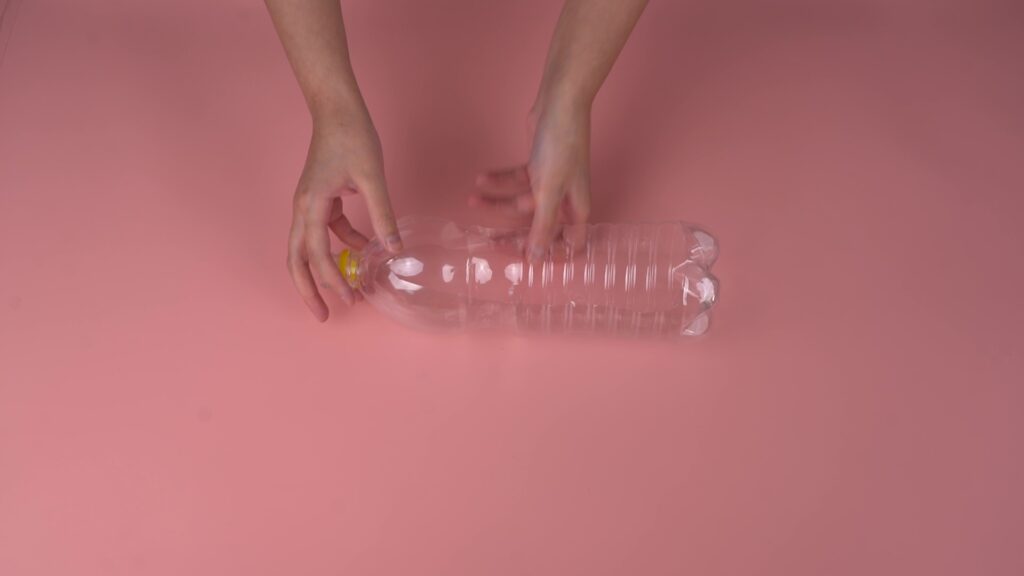
Step 1. Cut the bottle in half as shown in the picture.
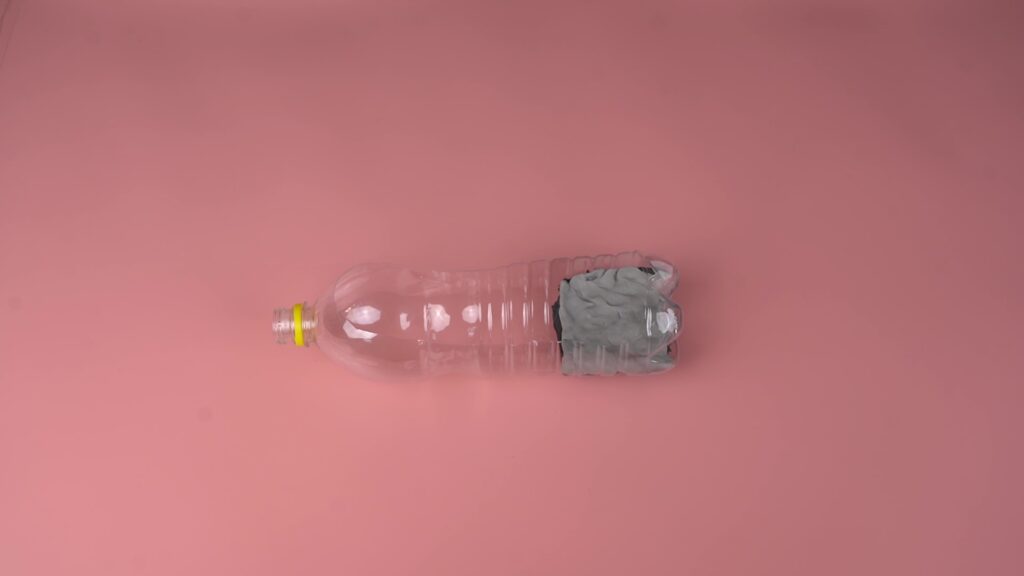
Step 2. Attach soft clay or plasticine to the bottom part of the bottle so that it fills about ⅓ of the space. Let it dry. This will represent asphalt.
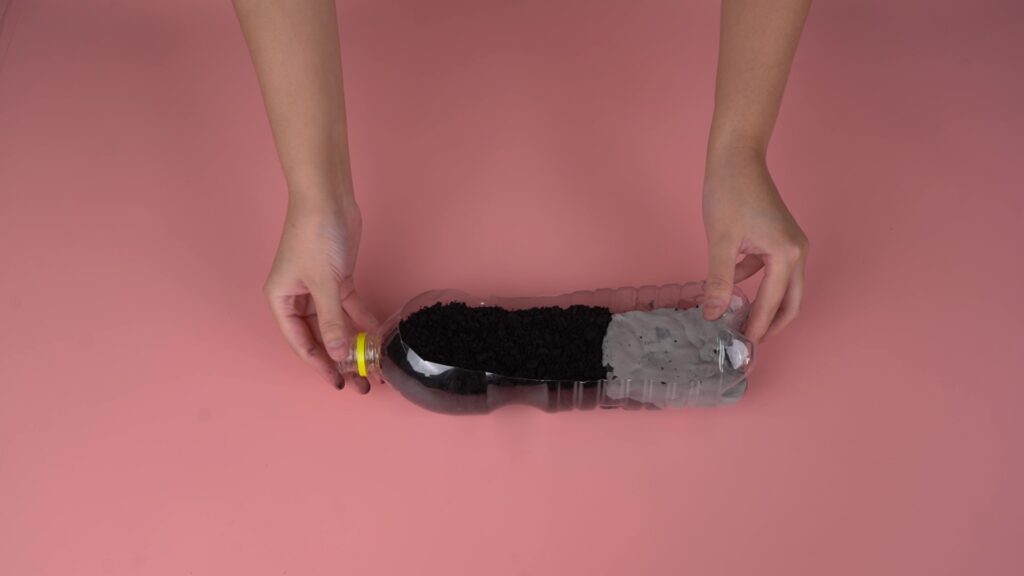
Step 3. Fill the remaining part of the bottle with soil. The soil will represent the rain garden.
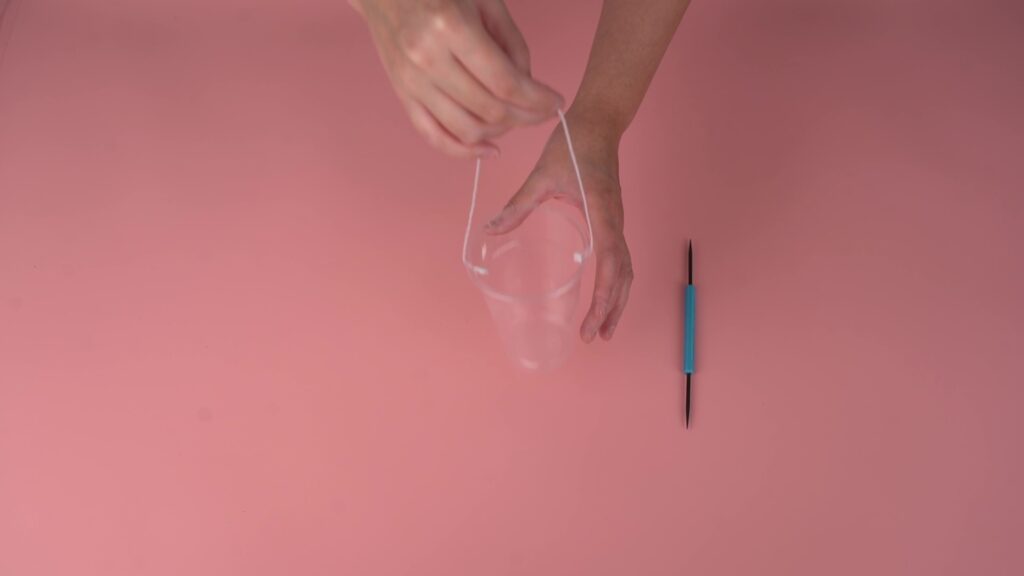
Step 4. Punch two holes on opposite sides of the cup. Thread a string through the holes and tie the ends to make a handle.
Step 5. Prepare “dirty water.” Mix water, vegetable oil, food coloring, oatmeal, and a little soil in a cup.
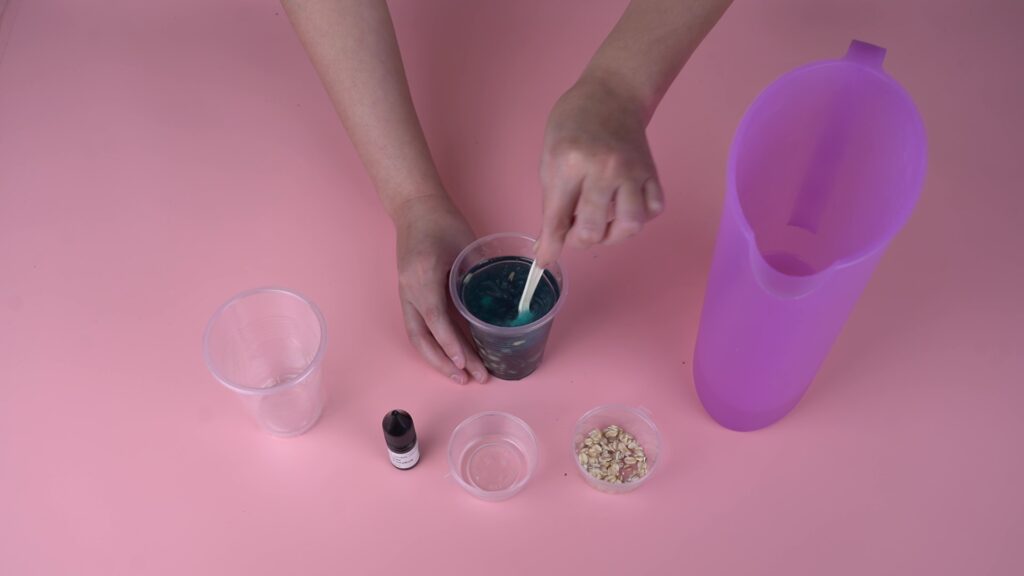
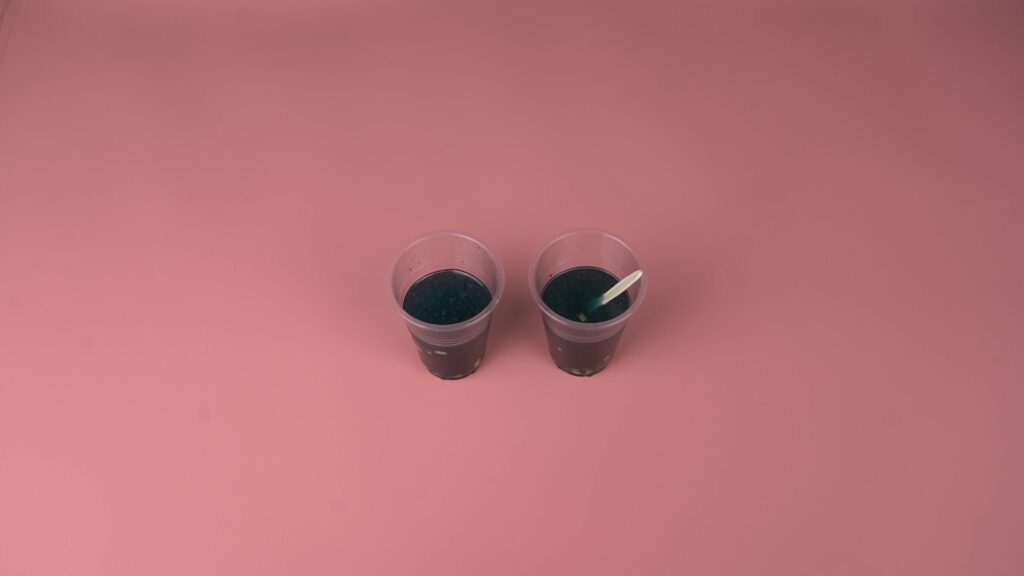
Step 6. Divide the prepared dirty water into two cups.
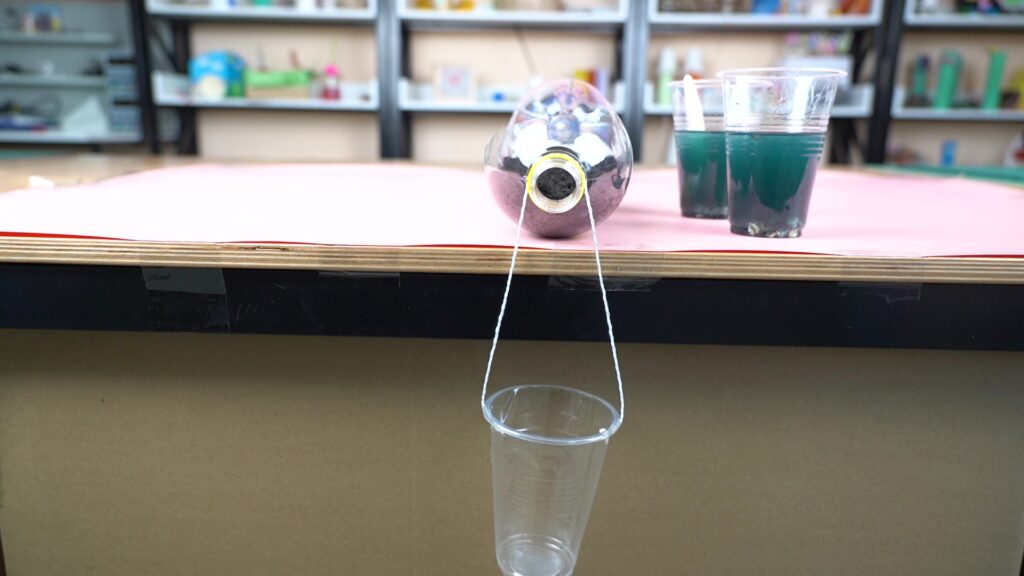
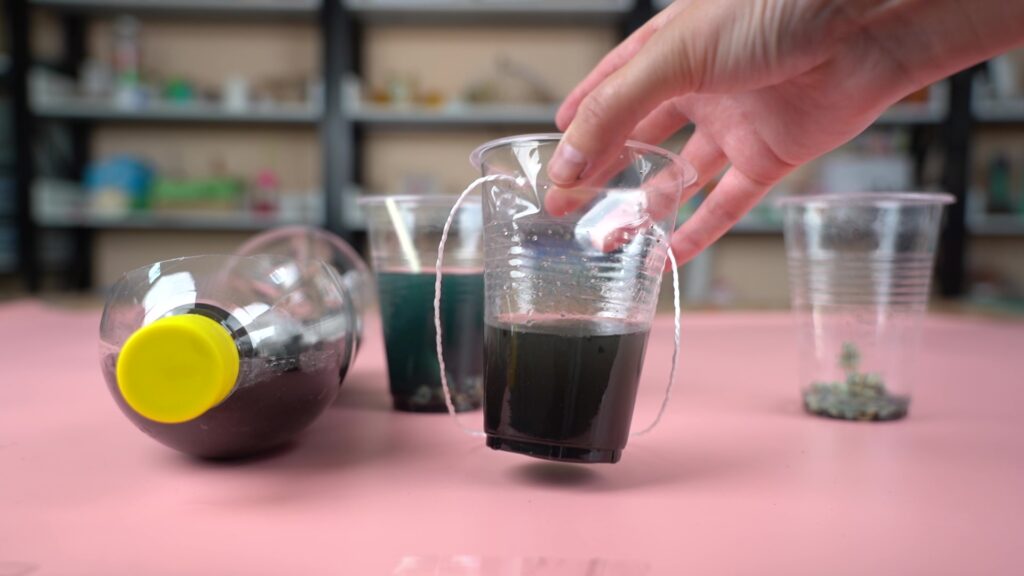
Step 7. Place the bottle so that its mouth sticks out beyond the edge of the table. Put a cap or another object under the bottom to raise it. Hang the cup by the string at the bottle’s mouth.
Step 8. Pour one cup of dirty water into the bottle from the side with clay/plasticine.
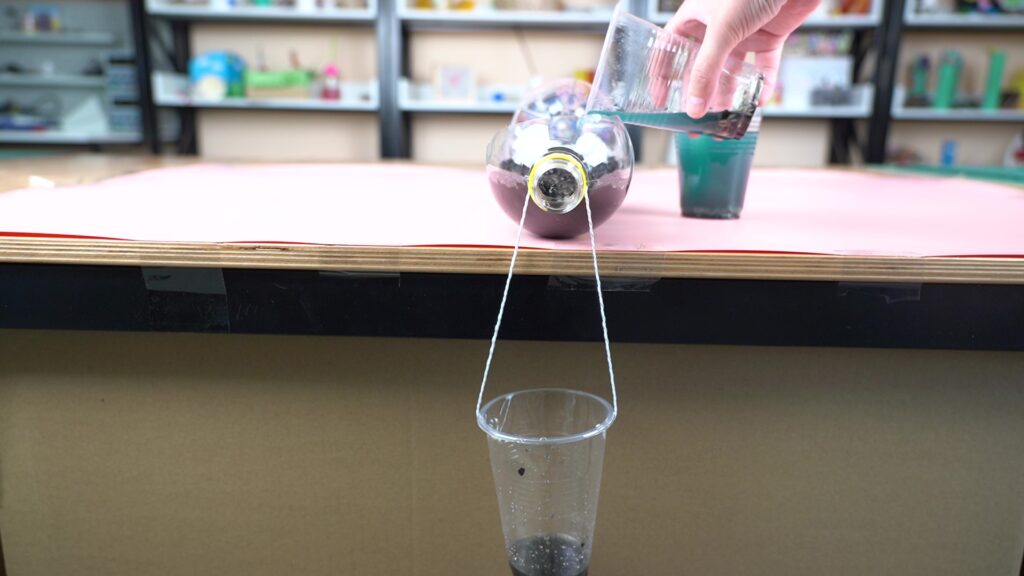
Step 9. Observe the filtered water that drips into the hanging cup. Compare it with the second cup of dirty water.
Conclusion
Through this experiment, students not only identify the sources of water pollution but also clearly understand the process of natural filtration. As a result of the project, children will:
- recognize the ways water can become polluted;
- understand the role of soil as a natural filter;
- develop a sense of ecological responsibility.
Water is a limited resource. Experiencing that its protection is everyone’s duty helps students build ecological thinking.
In this project, each student is assigned a STEAM title in several categories:
– By assembling this model, you have become a true master of science! You have learned how clocks work. This is real scientific thinking!
– Look at this beautiful clock! You have used your design and problem-solving skills to create a working model. Congratulations, you are an expert engineer!