Lesson 2
Theoretical part
FILTERING – is based on passing the water to be treated through a porous layer of filter media (activated carbon and gravel-sand are used in this project) where particles of a certain size are retained.
Why use gravel/sand as filter media? As a natural filter, the gravel is capable of holding back the smallest particles of suspended matter and impurities, and such a gravel filter is also self-cleaning.
Why use activated carbon as a filter medium? Granular charcoal filters effectively remove all impurities of organic origin, as well as chlorine.
As for micro-organisms in water, the activated carbon is powerless. To remove bacteria from the water, an additional bactericidal additive is required.
NOTE!!! The water filtered in this experiment MUST NOT be consumed by humans.
Practical part
Step 1: Remember what you did in the last class and have all the necessary materials ready to continue the project.
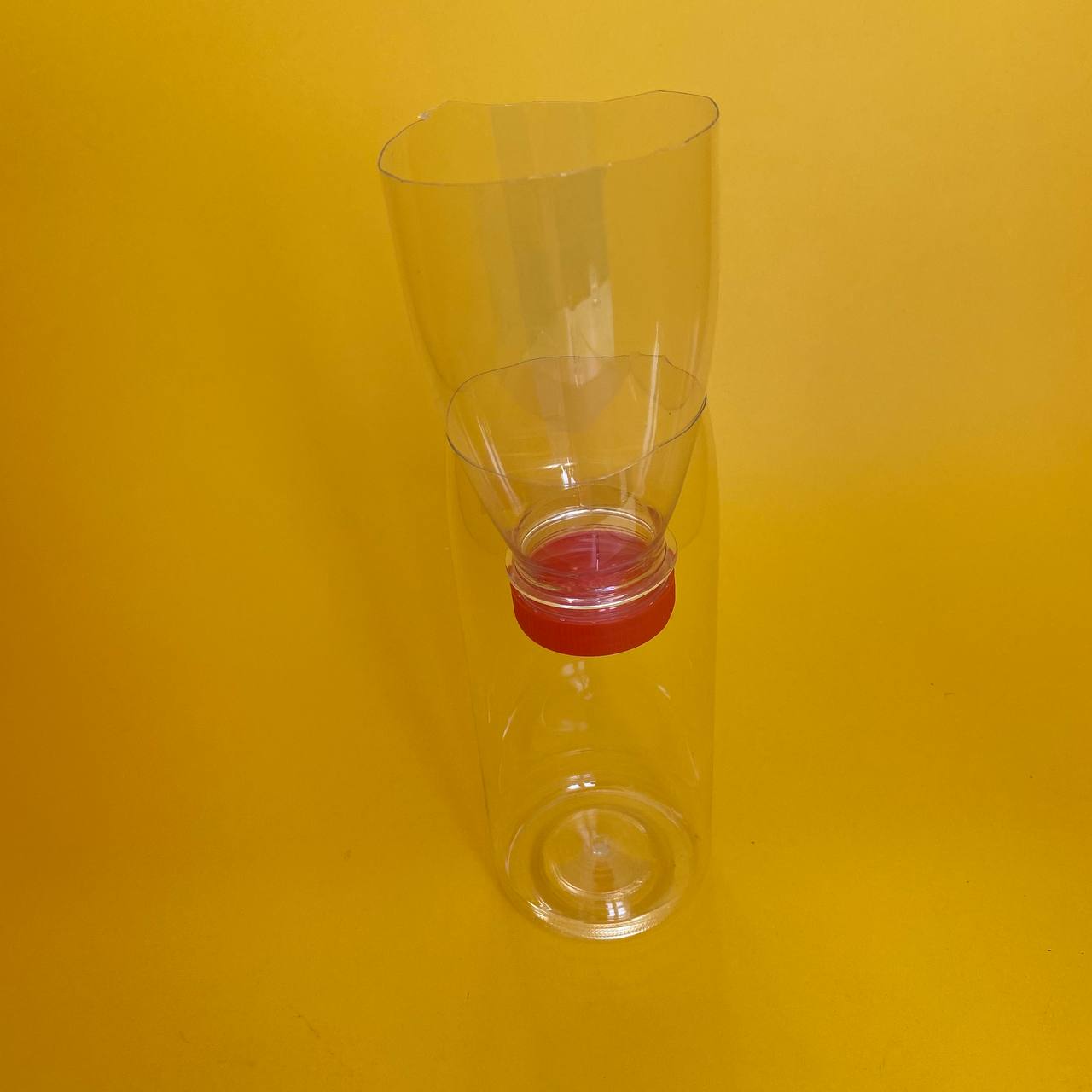
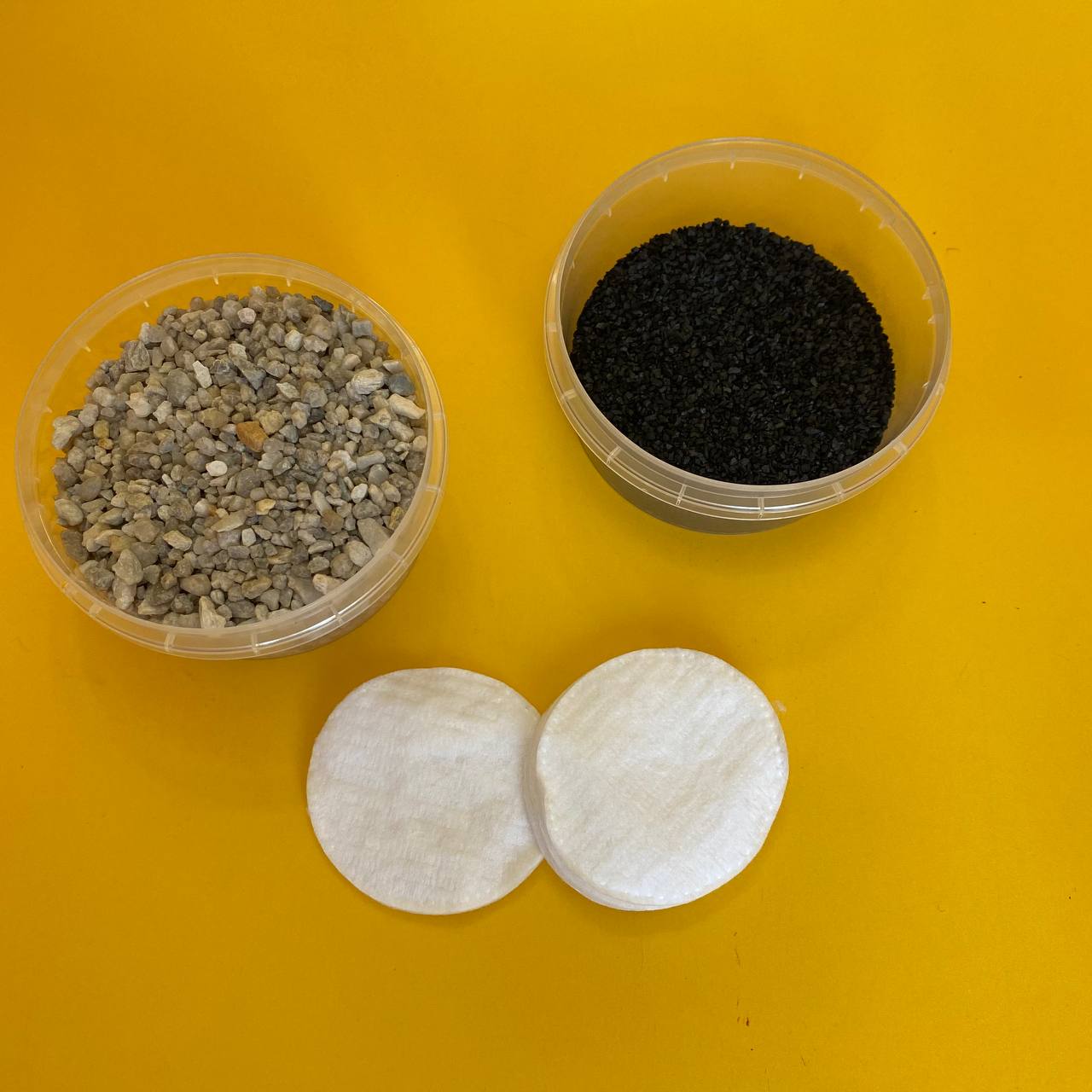
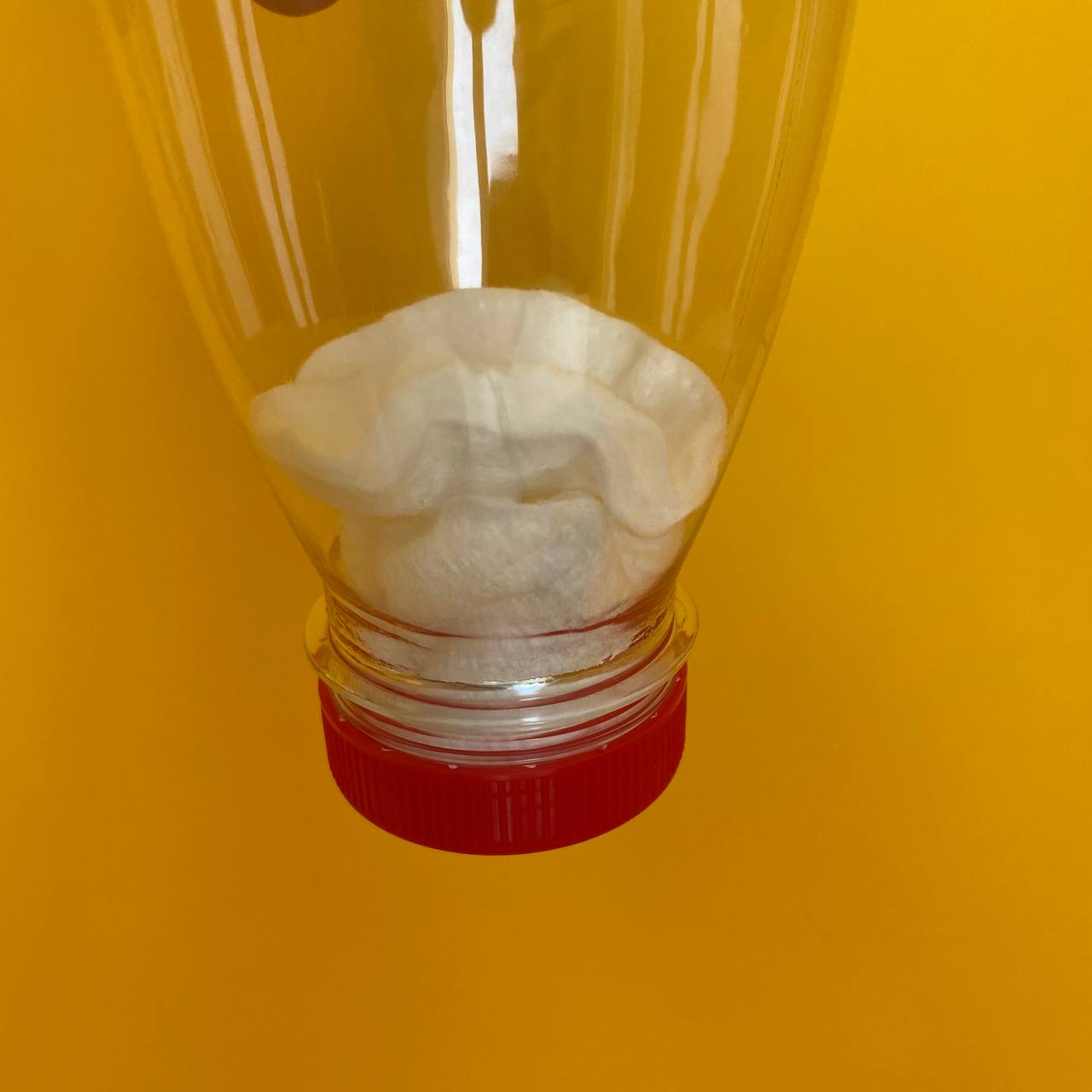
Step 2: Fill the bottle with the cap:Take a small piece of cotton wool and fill the bottom so that the holes in the lid are not visible.
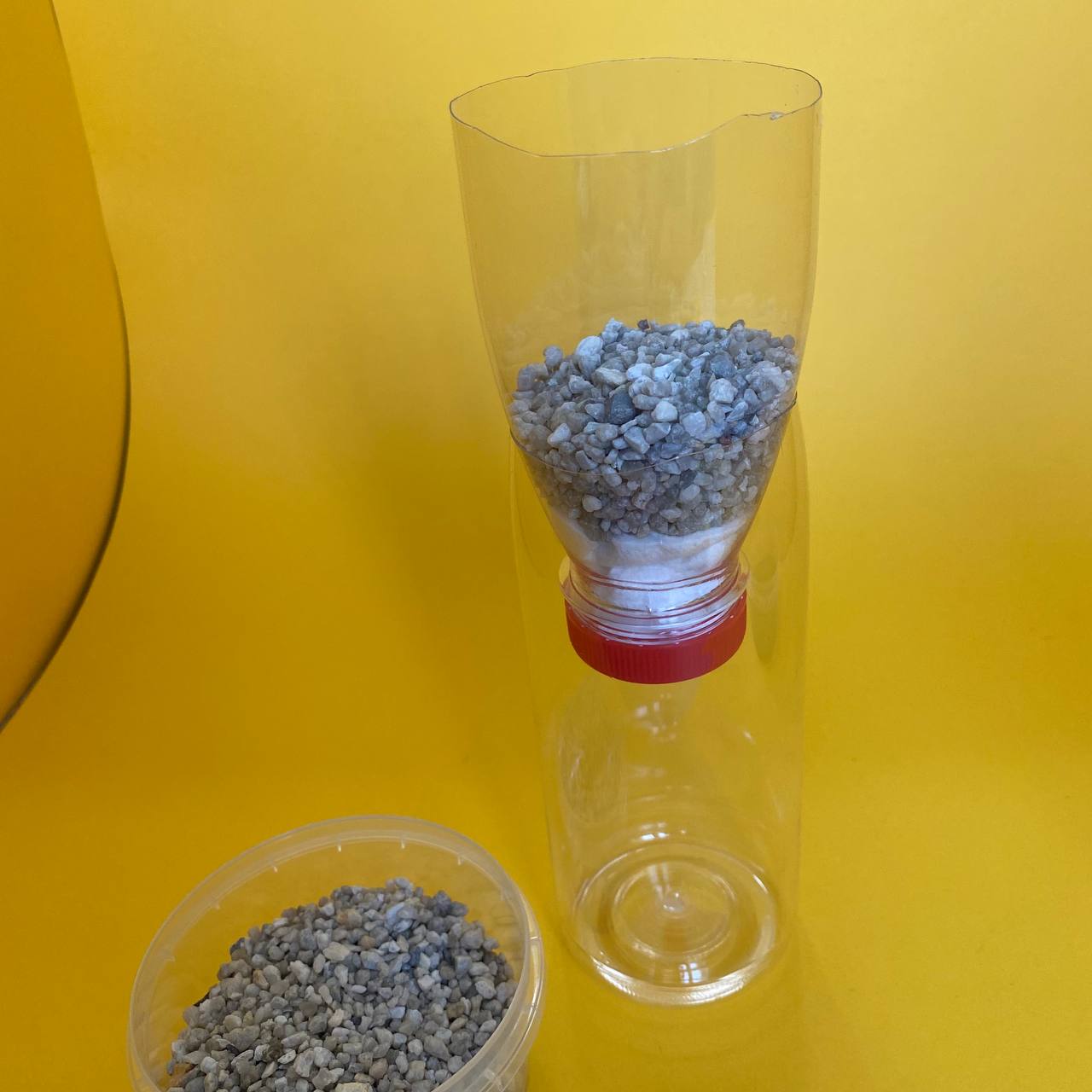
Step 3: Fill the bottle with the cap:Next, fill in half of the gravel – about 50g
.jpg)
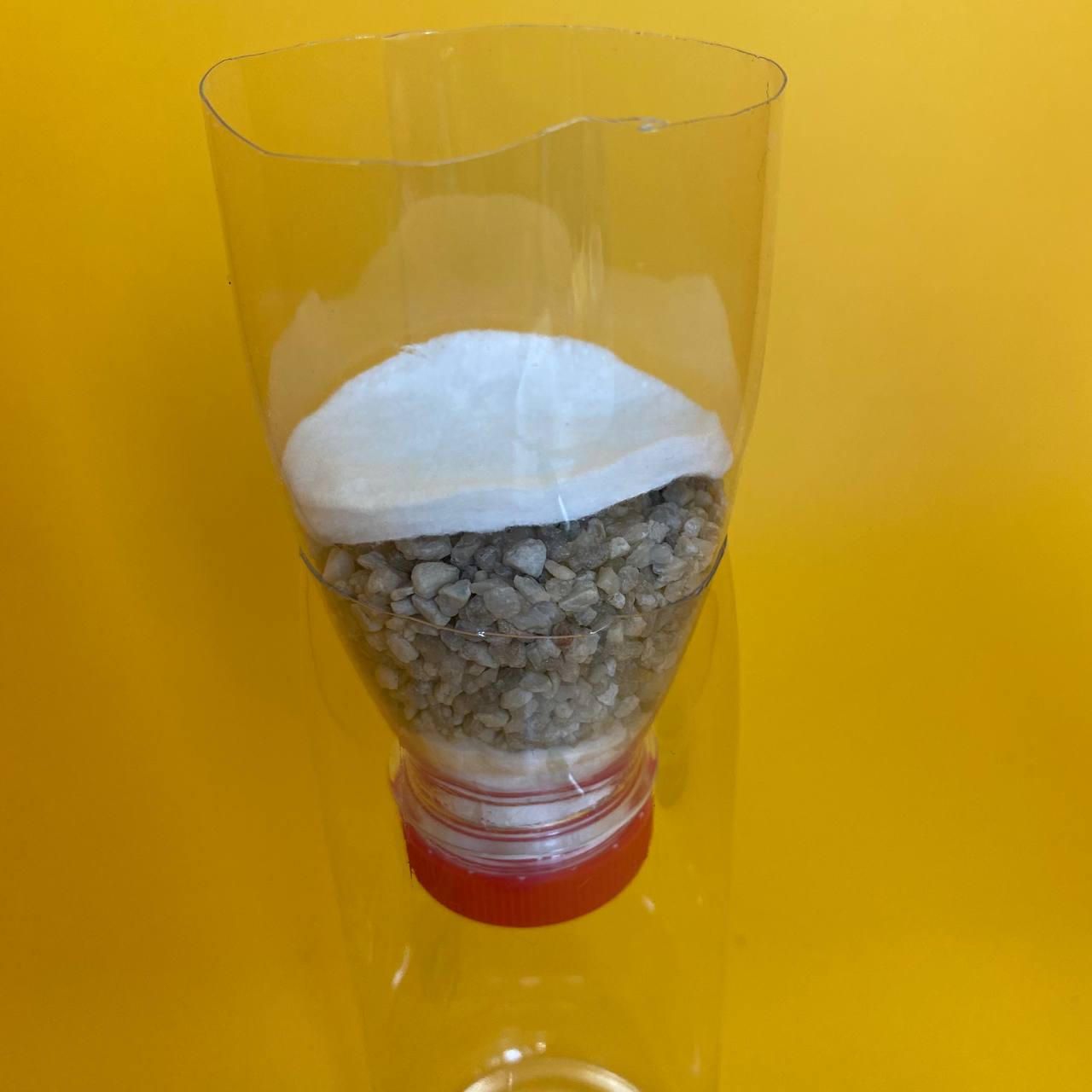
Step 4: Fill the bottle with the lid:Then we put down cotton wool – not necessary.Then fill in the activated charcoal and also put cotton wool on top.
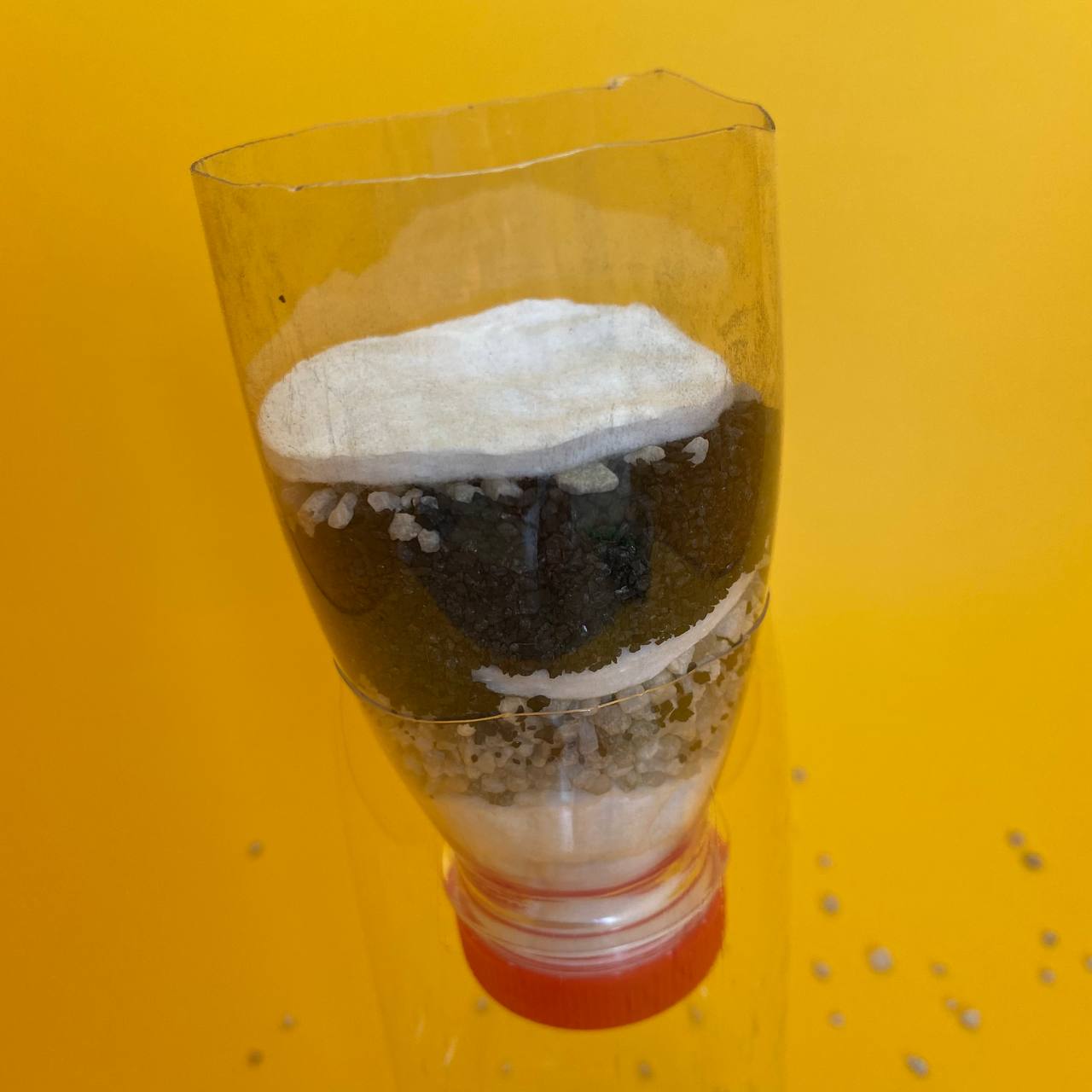
Step 5: Fill the bottle with the cap: Then fill in the rest of the gravel again
.jpg)
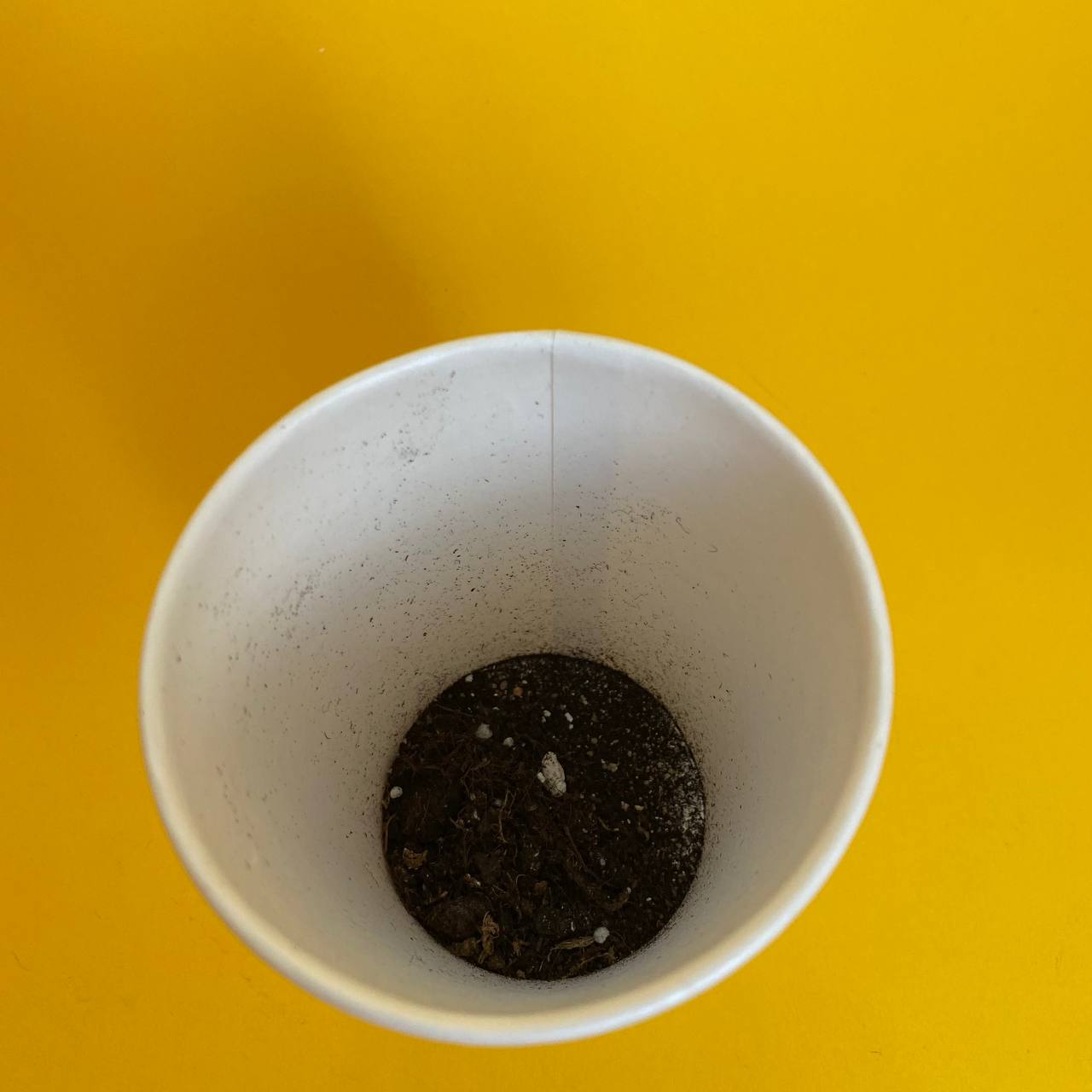
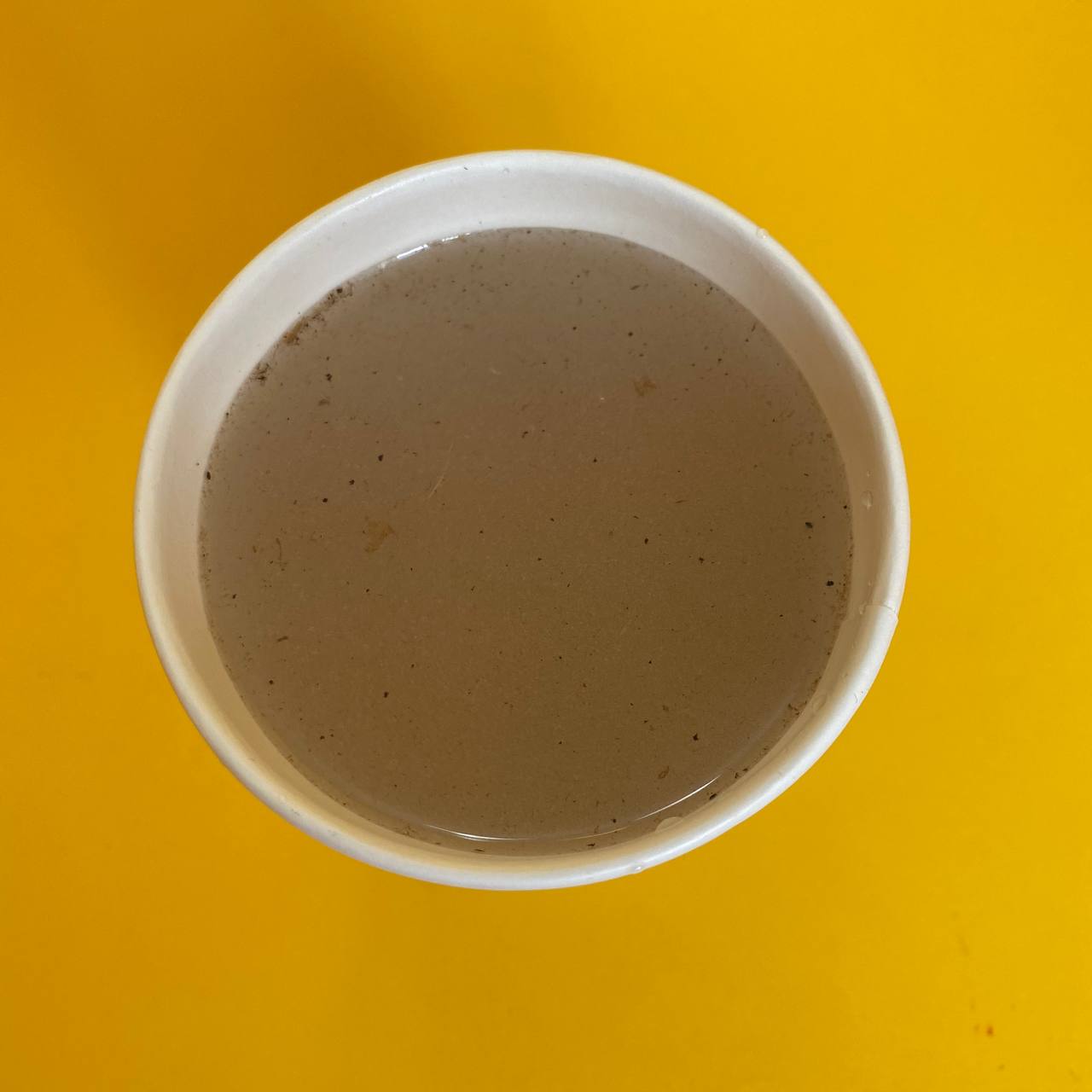
Step 6. Begin testing:Find soil or sand or a substance that contaminates the water. Pour in the water and mix well.
Step 7: Begin testing:Then pour this solution onto the filtered material. Record or voice your observations.
.jpg)
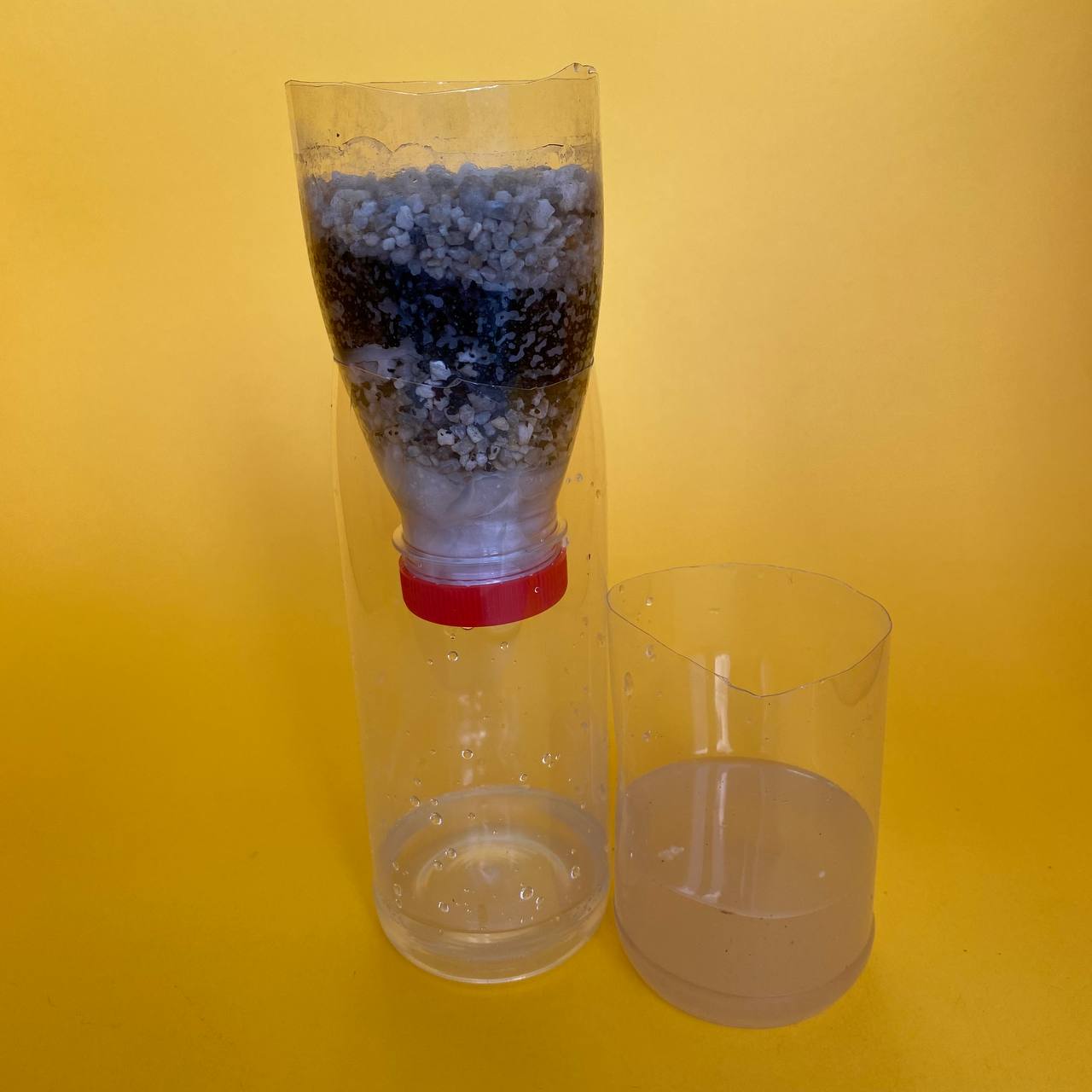
Step 8. How does the filtration process work?What is observed?
Do not drink the water under any circumstances!!!
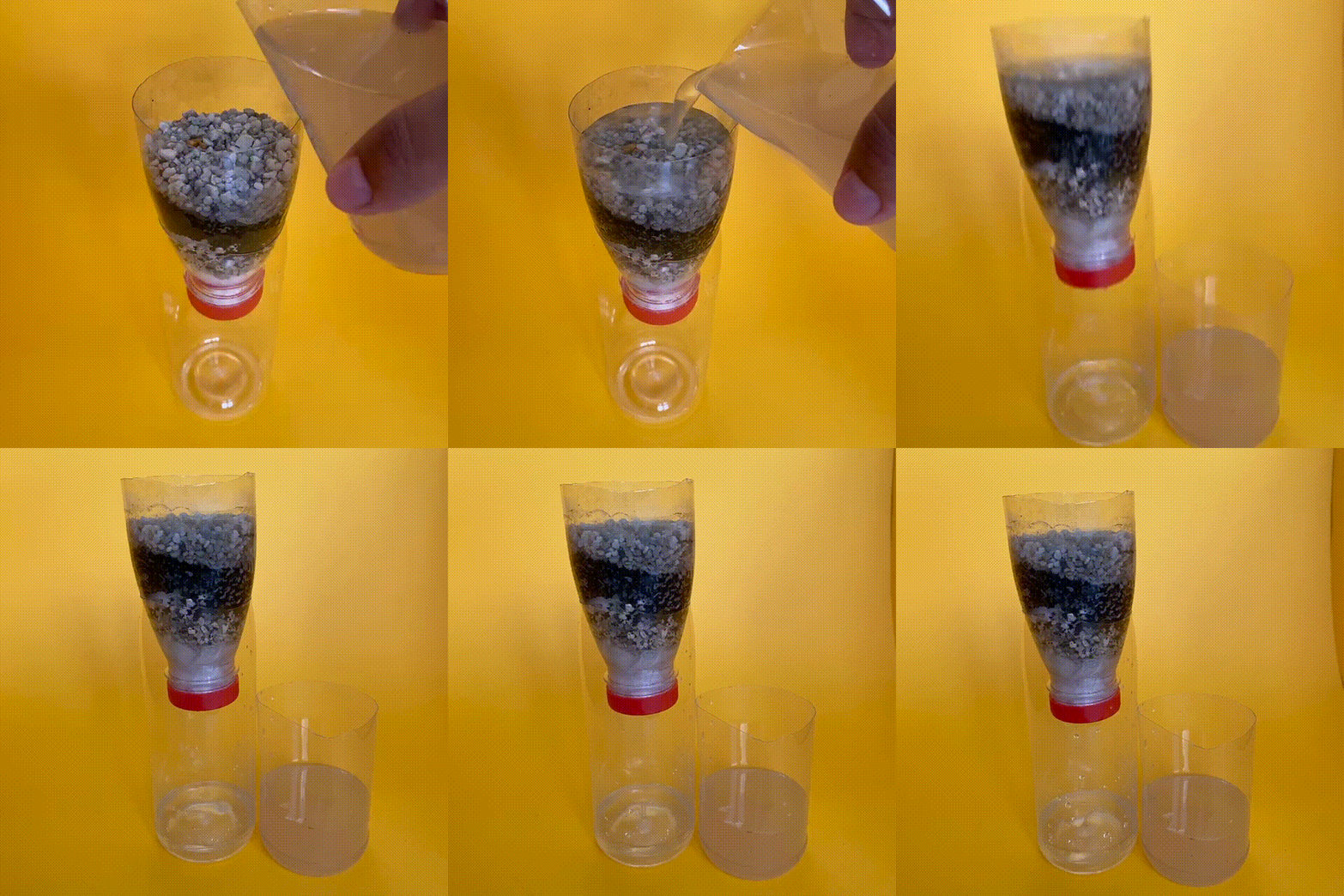
In this project, you can have a team competition. Be the judge in assessing the quality of the filtered water: hold a piece of white paper up to the filtered water and check that there are no solid particles or foreign colour. The winning team has the cleanest water bottle. Good luck to all teams!
Conclusion
So, investigating a global problem like water pollution, the students were asked to make a water purification plant as a solution to this problem. Moreover, the pupils made their own filter unit, which can clean the polluted water and made a visual analysis of the water.
On this project, each pupil is awarded a STEAM title, in several categories:
– You have independently investigated the properties of water, studied the factors that pollute water, and proposed solutions to the problem, you are a real environmental scientist and future chemical engineer!
– You have built a water treatment plant yourself. Congratulations, you are a creative young chemical engineer!
– In addition, you have examined the filter media and cleaned the dirty water, and thereby determined the water quality by visual inspection. Congratulations, you are an excellent scientific researcher!
Our STEAM team is proud of each and every one of you!
And thank you for your hard work and for contributing to our planet!!!
Evaluation