
Lesson

Purpose of the work:
- to investigate the mechanism of the process of transpiration in plants
- to explore the influence of external factors on the transpiration process
Expected results:
After completing the work, students can:
- develop teamwork skills
- be able to analyze and summarize the information received
- draw logical conclusions
Teacher’s Guide:
- Divide the students to 3 students in each group.
- Before starting laboratory work, please read the safety rules by following the link:
To download the worksheet, follow the link:
Theory
Plants have a number of morphological and anatomical features that reduce water loss in arid conditions. These adaptations are called xeromorphic. Plants that grow in dry places and are adapted to the lack of water are called xerophytes.
Light
The stomata (openings on the leaf surface) usually open in the light and close in the dark, which helps reduce water loss at night. Plants from the Crassulaceae family close their stomata during the day and open them at night, which promotes daytime photosynthesis.
Temperature
In the light, temperature has the strongest influence on transpiration. The higher the temperature, the faster water evaporates from the mesophyll cells and the more the air inside the leaf is saturated with water vapor. Solar radiation raises leaf temperature, and pale-colored plants may have xeromorphic traits such as being covered with hairs, scales, or wax to reduce warming and water loss.
Humidity and water vapor pressure
Decreased air humidity usually promotes transpiration, while an increase in humidity, on the contrary, reduces transpiration. Some plants have submerged stomata or special structures to create a moist atmosphere around the leaf and reduce water loss.
Wind
When there is no wind and the air is calm, an air shell saturated with water vapor is created near the surface of the leaf. Some plants have hairs and scales that create a zone of calm air and slow down transpiration.
Availability of water in the soil
As soil dries out, water binds more strongly to soil particles, which reduces water uptake by roots and hence transpiration.
Practical part
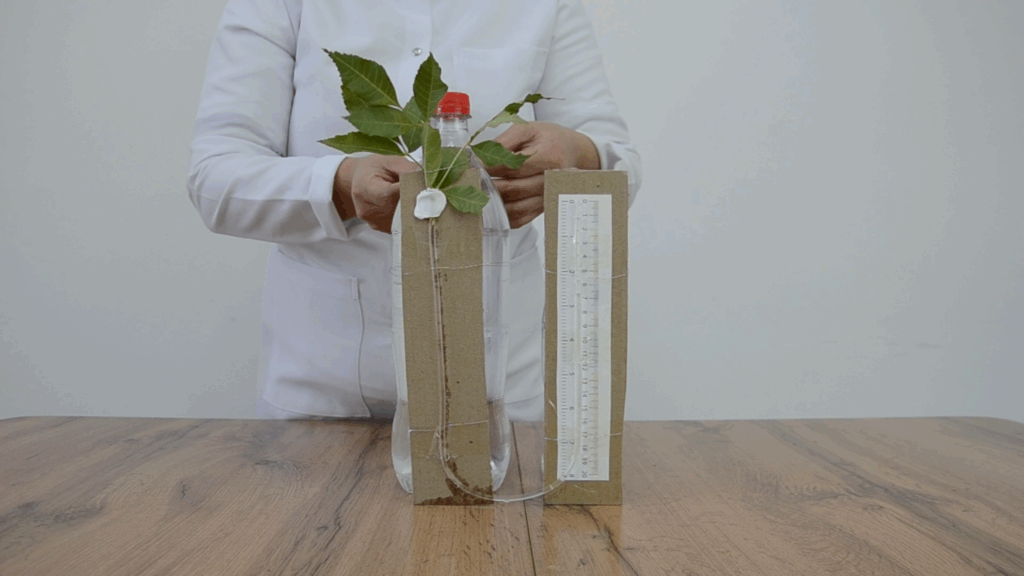
A Potometer experiment is performed to estimate the transpiration rate in different plants. A potometer is an apparatus used to determine the transpiration rate of the cut shoot at the desired time. It is also called a transpirometer.
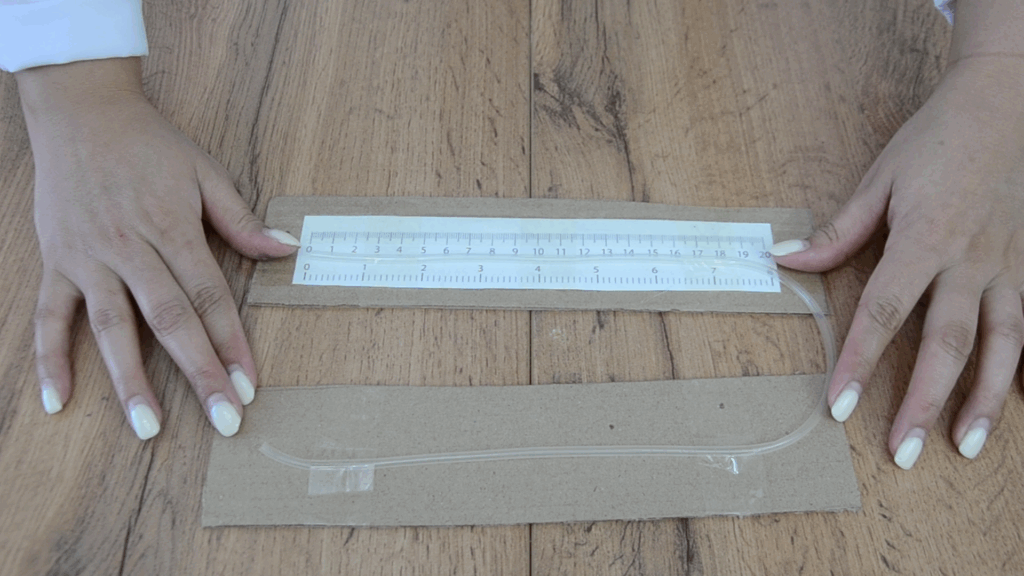
Step 1. Take a thick cardboard of size 25cm x 6 cm along with the scale template. Link
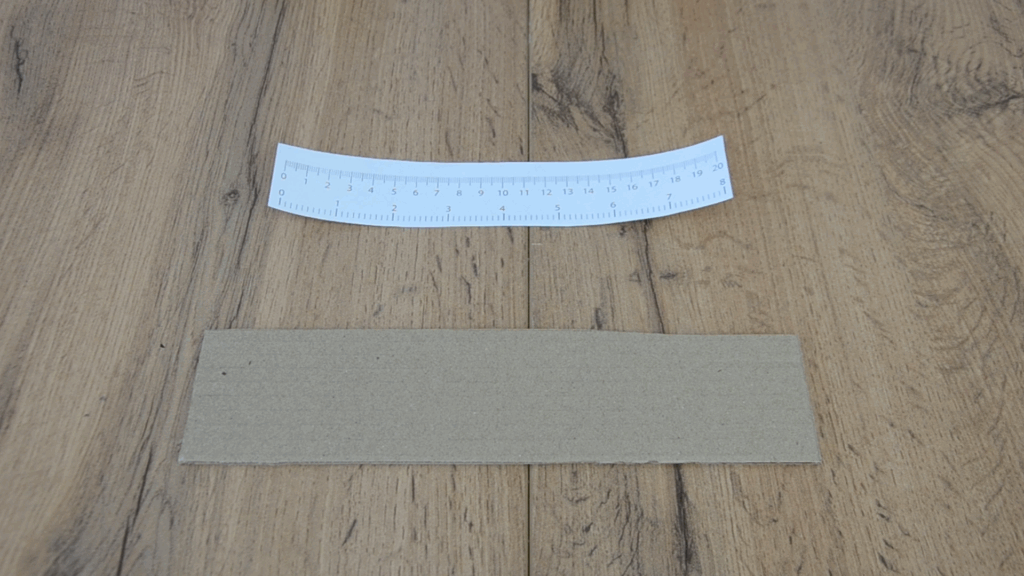
Step 2. Place the scale template on the thick cardboard, close to one of the shorter ends of the thick cardboard and secure it with the transparent tape.
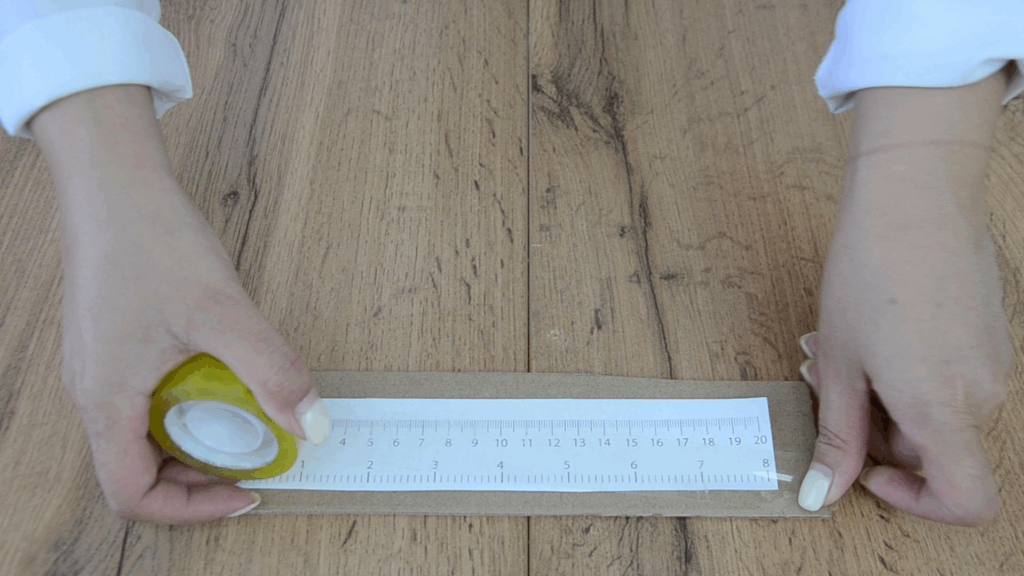
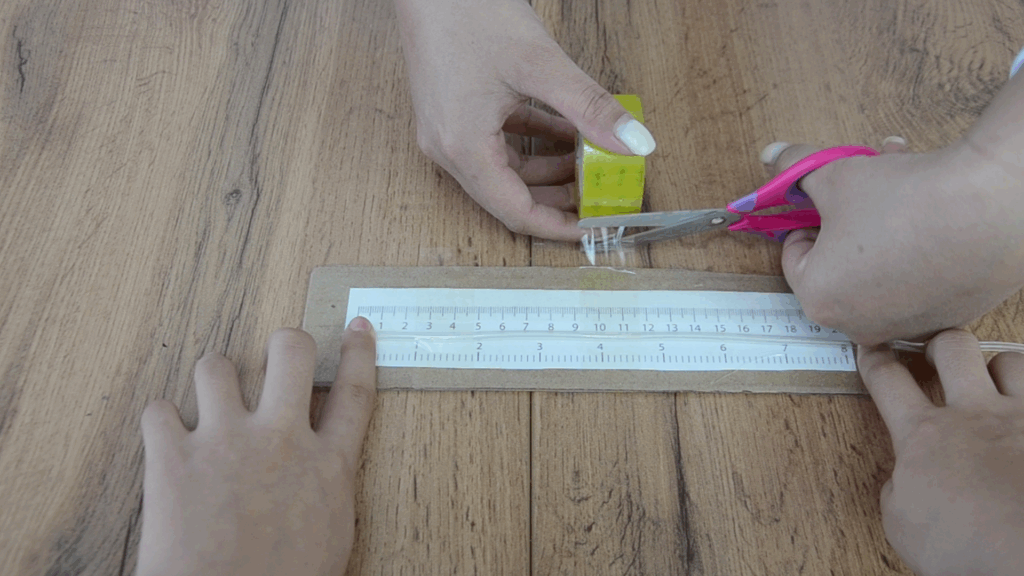
Step 3. Take a 50cm long transparent rubber tube and place it along the length of the cardboard such that one of the ends is at the 0 cm mark. Make the tube straight and secure it with the cardboard using a few pieces of transparent tape.
Step 4. Take another cardboard of size 25 cm x 6cm. Place the free end of the transparent tube along the length and about 2 cm from the shorter end of the cardboard
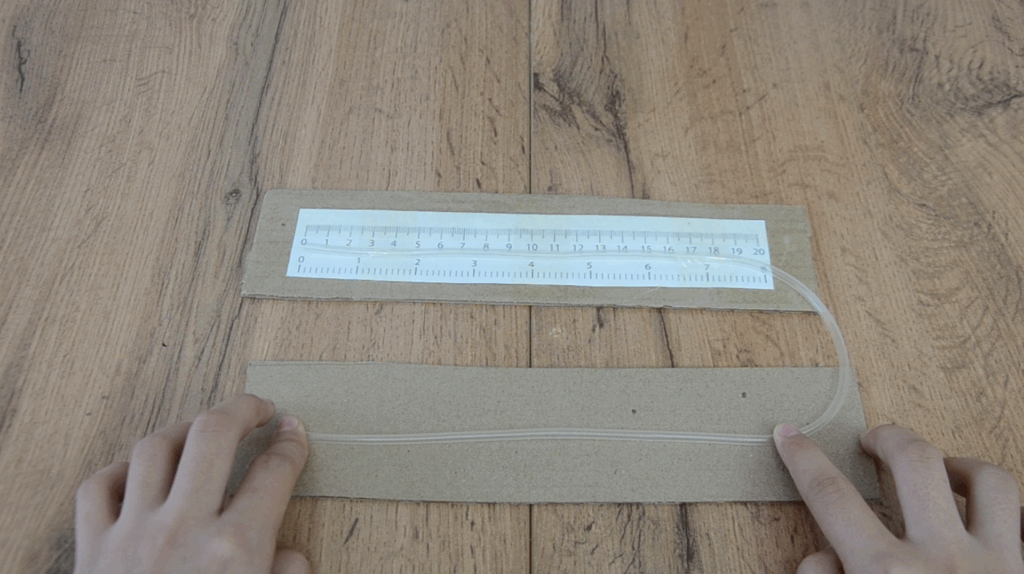
Step 5. Secure the tube with a few pieces of transparent tape.
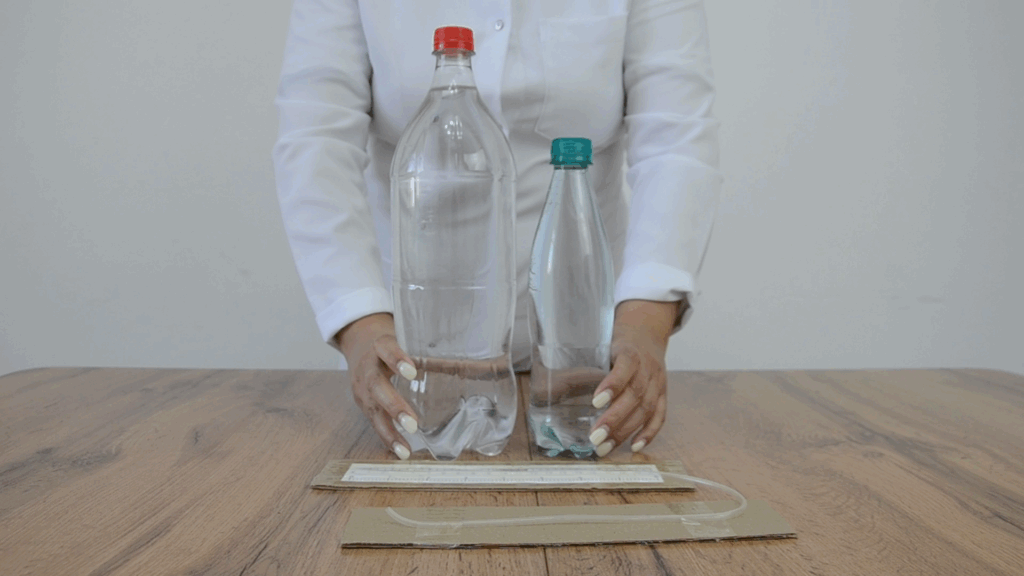
Step 6. Take a 2 litre plastic bottle and a 500 ml plastic bottle. Fill them with water. Place each of the prepared cardboard set-ups along the length of each of the plastic bottles such that the cardboard with the scale template is positioned on the 500 ml bottle and the other on the 2 litre bottle. Tie and secure each cardboard set-up to each of the plastic bottles with a piece of cotton thread.
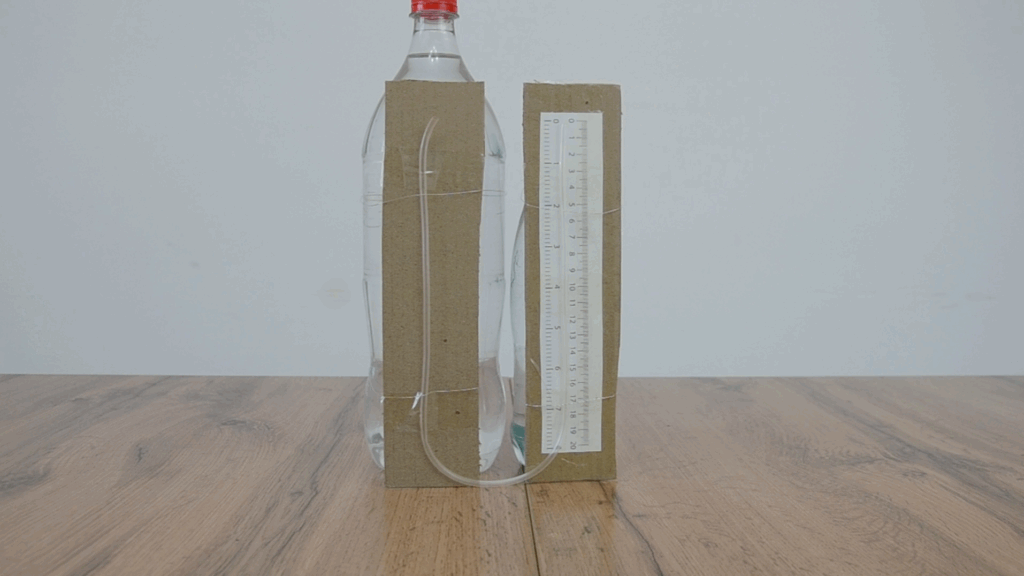
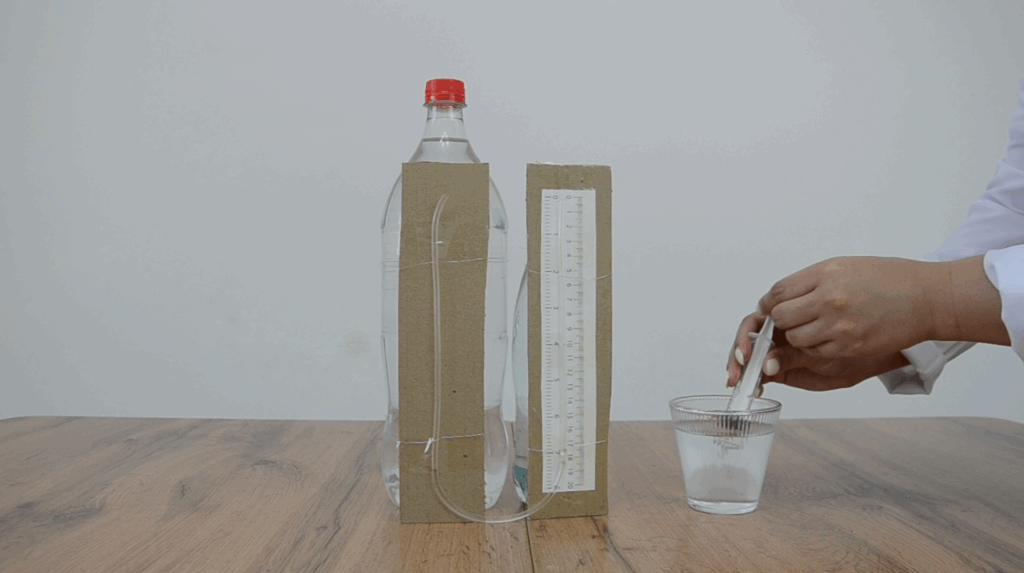
Step 7. Take water in a separate container. You can add colour to the water to see the distance travelled by the air bubble within the capillary tube. Using a dropper, slowly fill water through the open end of the tube on the scale template. Ensure that there are no air bubbles. Continue to fill water till it reaches the open end of the tube at the other end. Make sure the water level at the open end of the tube on the plain cardboard is till its brim.
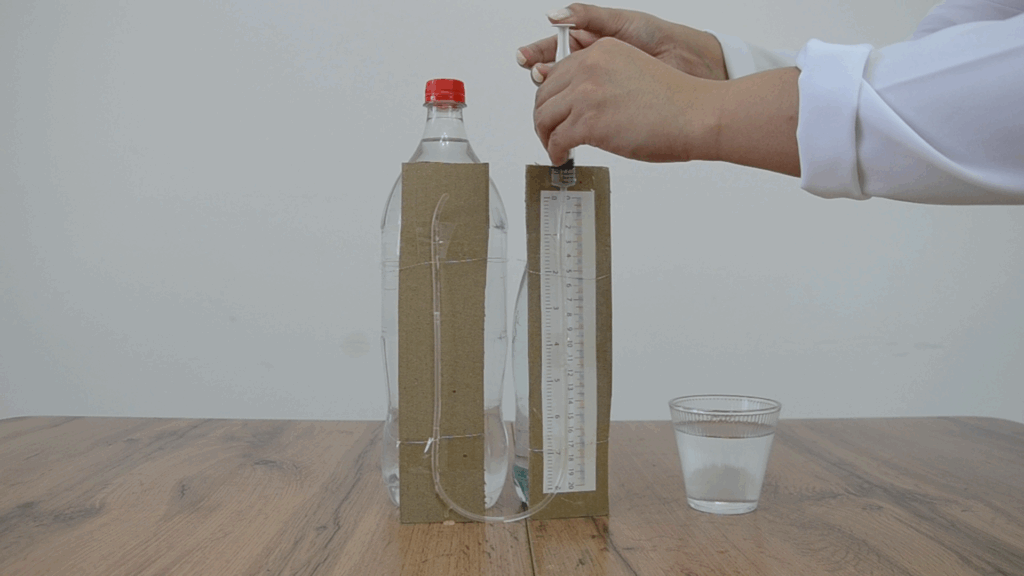
Step 8. Take a fresh leafy shoot with the stem’s diameter slightly more than the tube’s diameter. Using paper cutter (handle it carefully!), cut the stem closer to the leaves, to reduce the diameter for it to fit snugly inside the tube.
Step 9. Insert the leafy shoot through the open end of the tube on the plain cardboard, make sure it touches the water inside the tube.
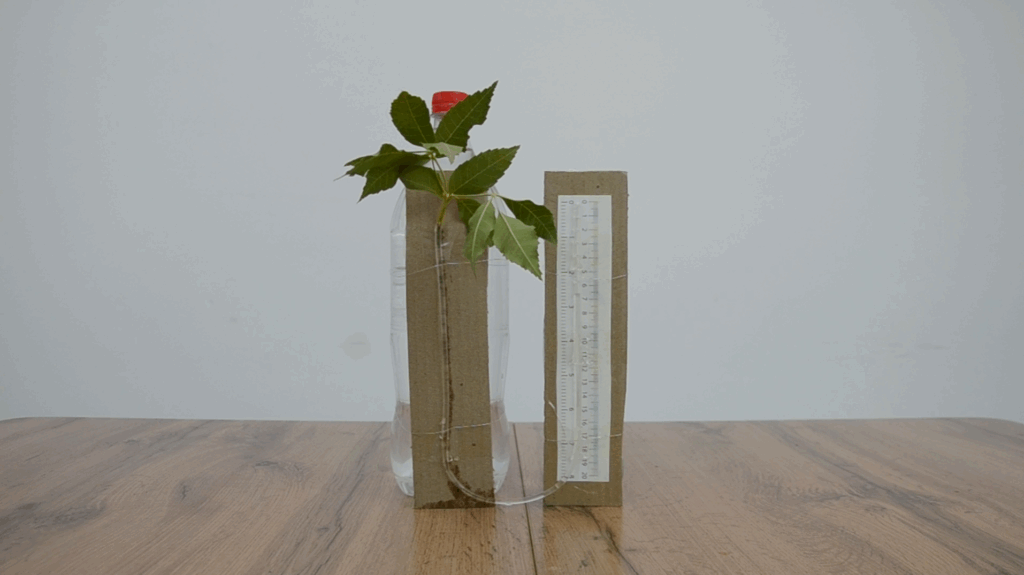
Step 10. Apply petroleum jelly at the tip of the tube and around the sides of the shoot, preventing air from entering the set up. Take a piece of insulation tape and stick it over the open end of the tube on the scale template. Using a safety pin, make 2-3 holes on the covered insulation tape to allow air to enter the set-up.
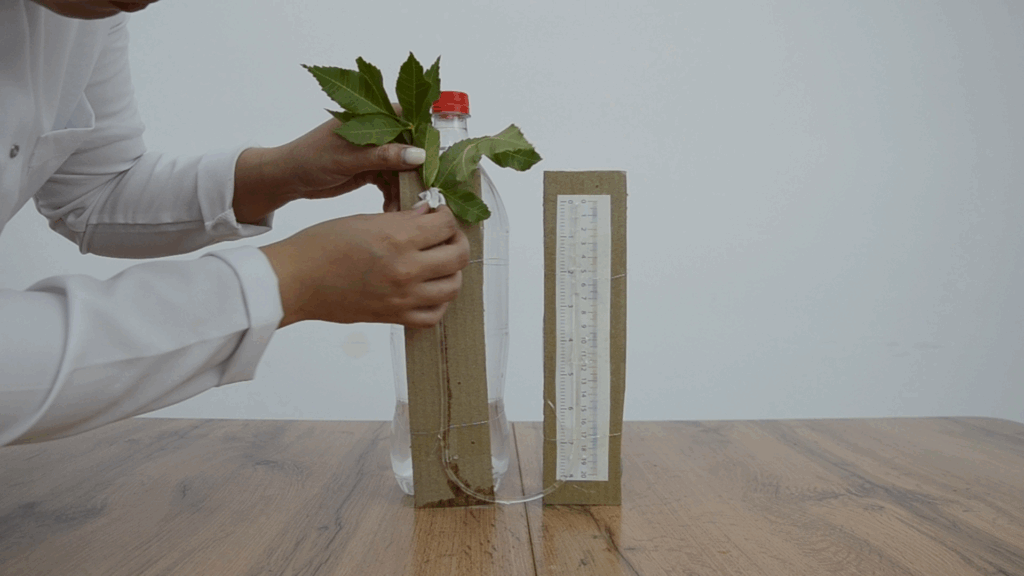
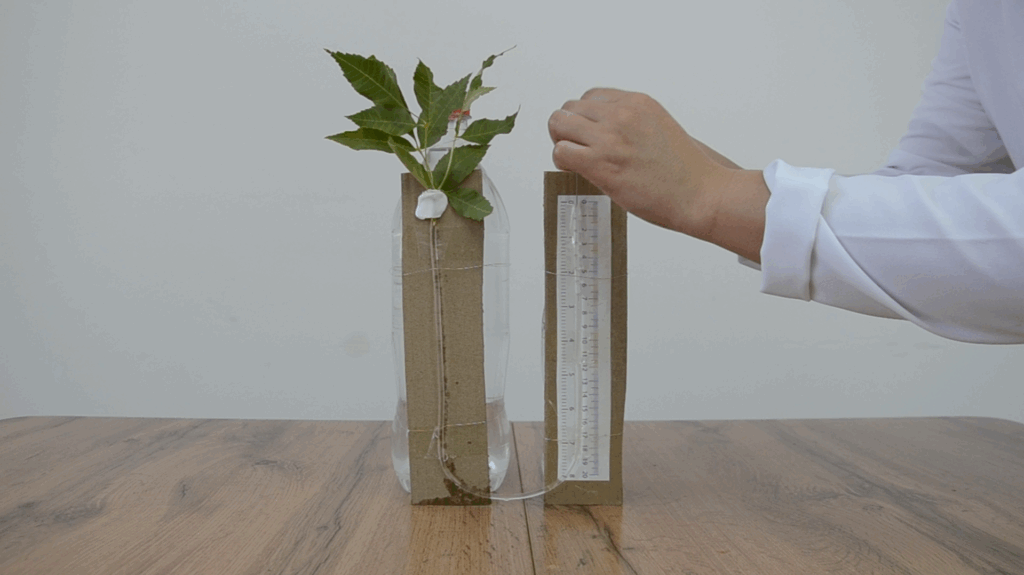
Step 11. Tie the leafy shoot to the neck of the 2 litre plastic bottle to prevent the shoot from falling off.
Our potometer is ready to use!
Research part
To study factors affecting the rate of transpiration, we can use:

- Bench lamp to know the effect of light intensity.
- Table fan to know the effect of wind speed (or you can use cold air mode of a dryer).
- Polythene to know the effect of humidity.
- Dryer to study the effect of temperature.
Step 12. Note down the distance of an air bubble before the experiment. Then set the time in the stopwatch. Allow the air bubble to move at a given time.
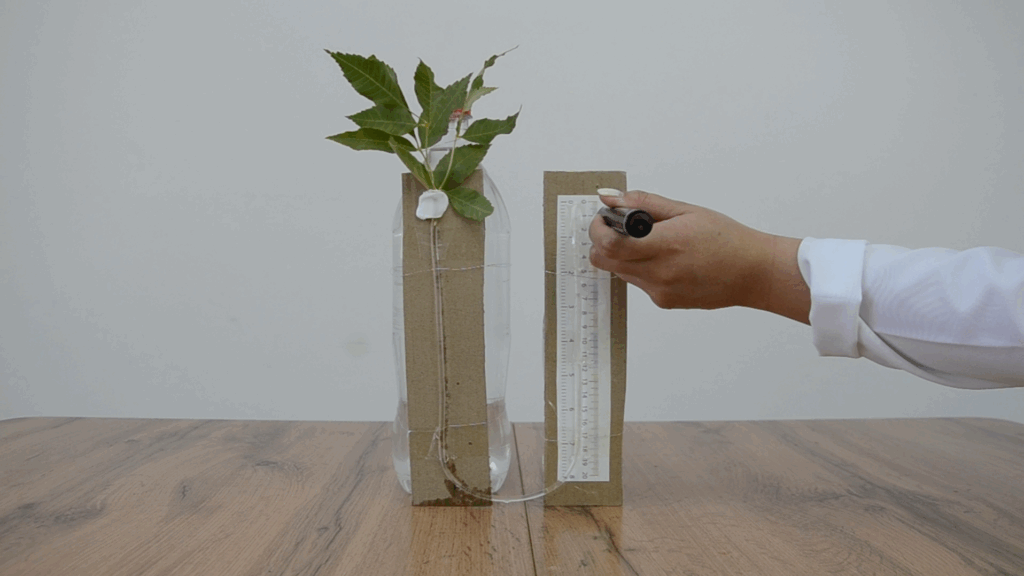
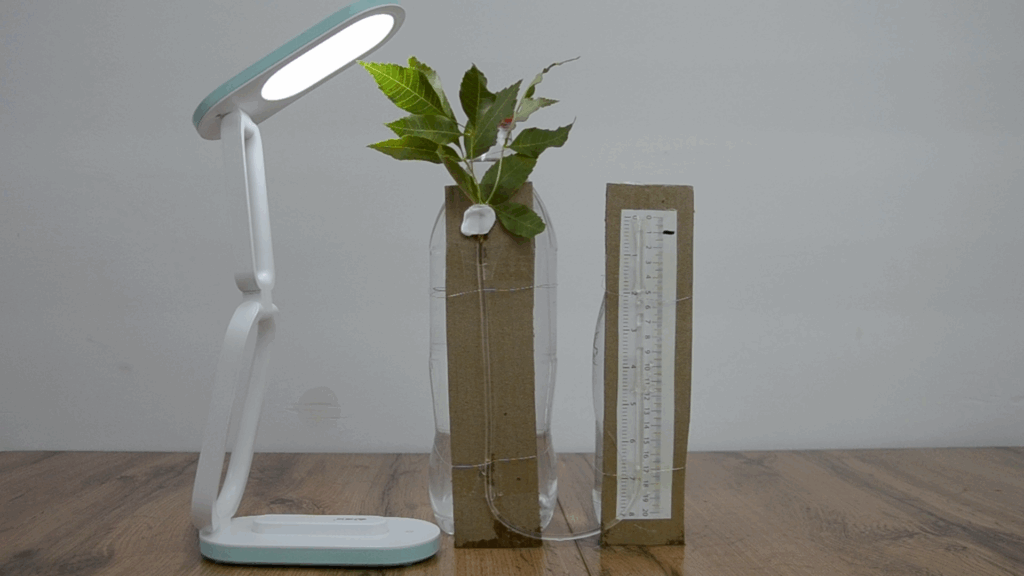
Step 13. Mark and observe the level of water in the transparent tube after 1 hour.
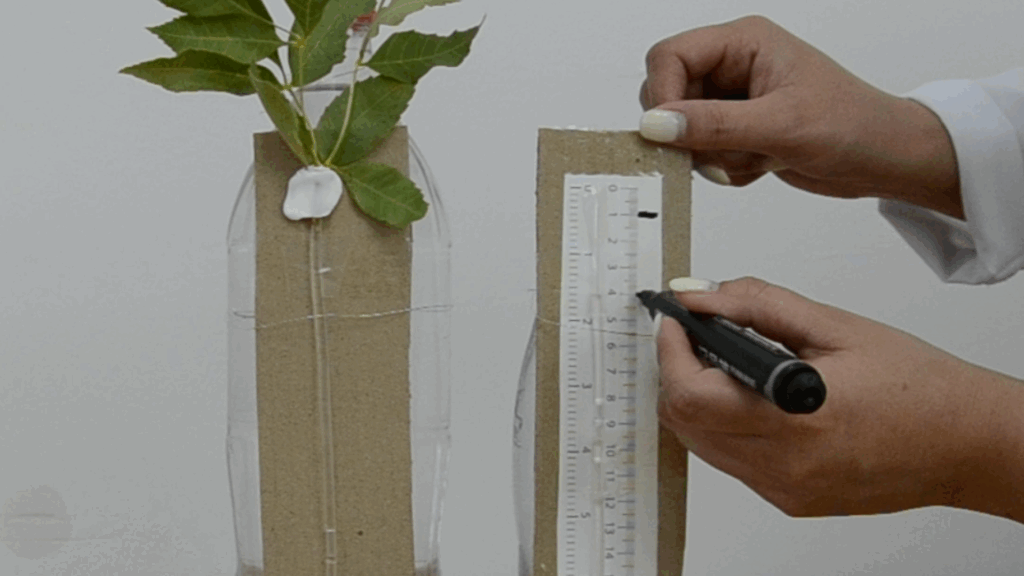
Step 14. Mark and observe the level of water in the transparent tube after 2 hours.
Step 15. Repeat the experiment by using items given above by refilling the system by turning the glass stop cock. During this stage, we can reset or adjust the air bubble.
How does a potometer measure transpiration?
Calculation: The formula for calculating rate of water uptake is volume of the capillary tube/time
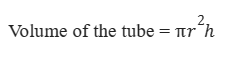
(r – radius of the tube, h – reduced water level)

As you have done the experiment, fill the results in the table below:
initial level of water | after an hour | after 2 hours | |
at room temperature | |||
at the light | |||
at the wind | |||
in a high humid environment | |||
at the high temperature |
Conclusion
This practical work enabled students to explore the transpiration process in plants and investigate the effects of external factors on this vital physiological process. By constructing and utilizing a potometer, they gained valuable insights into the factors that influence transpiration rates. This knowledge has practical implications for agriculture, horticulture, and ecological studies, contributing to the effective management of water resources and the well-being of plants in various environments.