
Lesson
Purpose of the work:
- to study the chemical properties of bases on the example of sodium hydroxide (caustic soda)
Expected results:
After completing the work, students can:
- build teamwork skills
- be able to analyze and summarize the information received
- make your own logical conclusions
Teacher’s Guide:
- The task is performed in groups of 2-3 people
- Before starting laboratory work, please read the safety rules by clicking on the link:
- To download the worksheet, follow the link:
Caution:
- All experiments with caustic soda should be carried out with protective glasses and gloves.
- Caustic soda solutions should be stored in tightly closed containers and out of the reach of children.
- If caustic soda comes into contact with the skin or eyes, wash the affected area with plenty of water and consult a doctor.
- When conducting experiments, it is necessary to follow the safety rules specified in the teacher’s manual.
Theoretical part
Bases are complex substances that contain one or more hydroxide ions (OH⁻). They have a number of characteristic properties:
- Change the color of the indicators (litmus turns blue, phenolphthalein turns crimson).
- Enter into neutralization reactions with acids.
- They react with salts to form insoluble bases (if any).
- They can interact with amphoteric metals and their oxides.
Sodium hydroxide (NaOH) is a typical base that is widely used in industry and laboratory practice.
Practical part

Step 1. Prepare all the necessary materials.
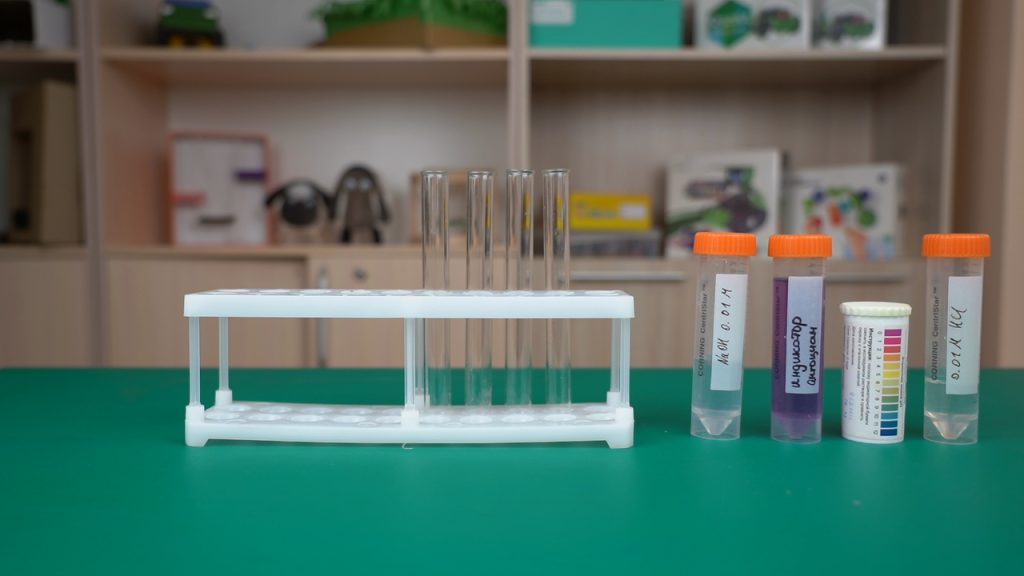
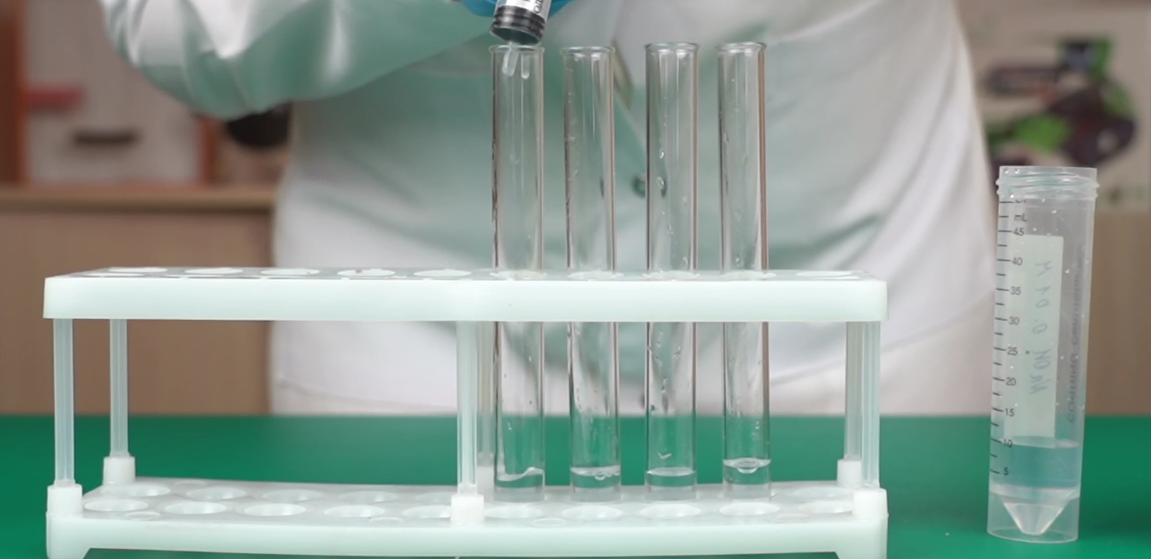
Step 2. Add 2 ml of caustic soda to each of the four test tubes.
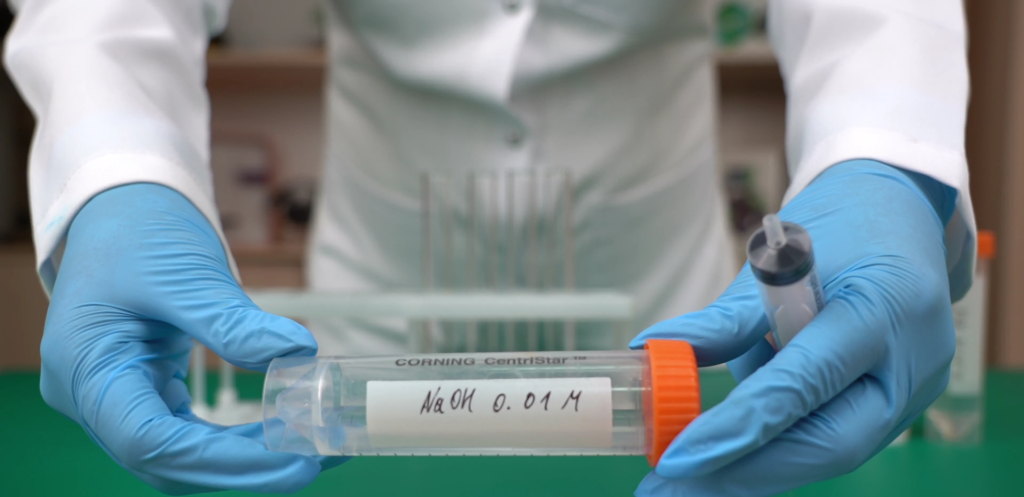
Experiment # 1: Interacting with indicators
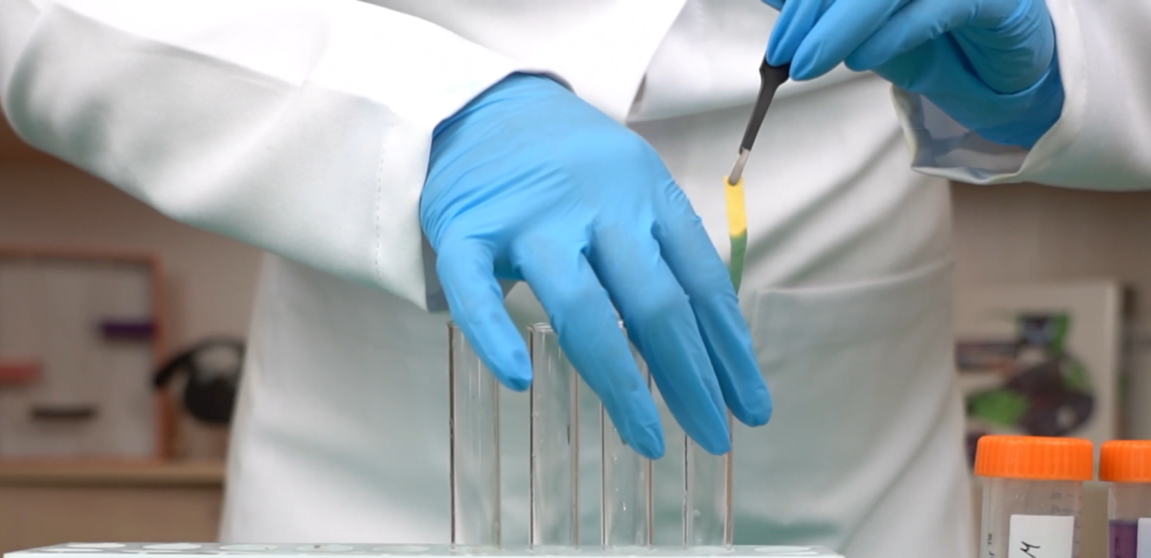
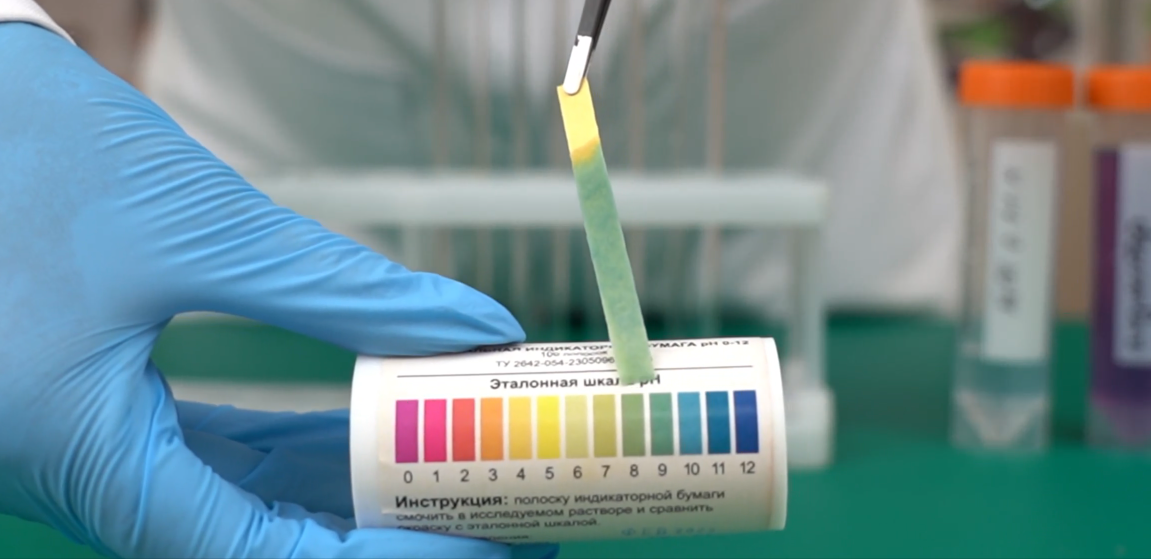
Step 3. Add a litmus paper to the first test tube. What did you notice? Describe the changes.
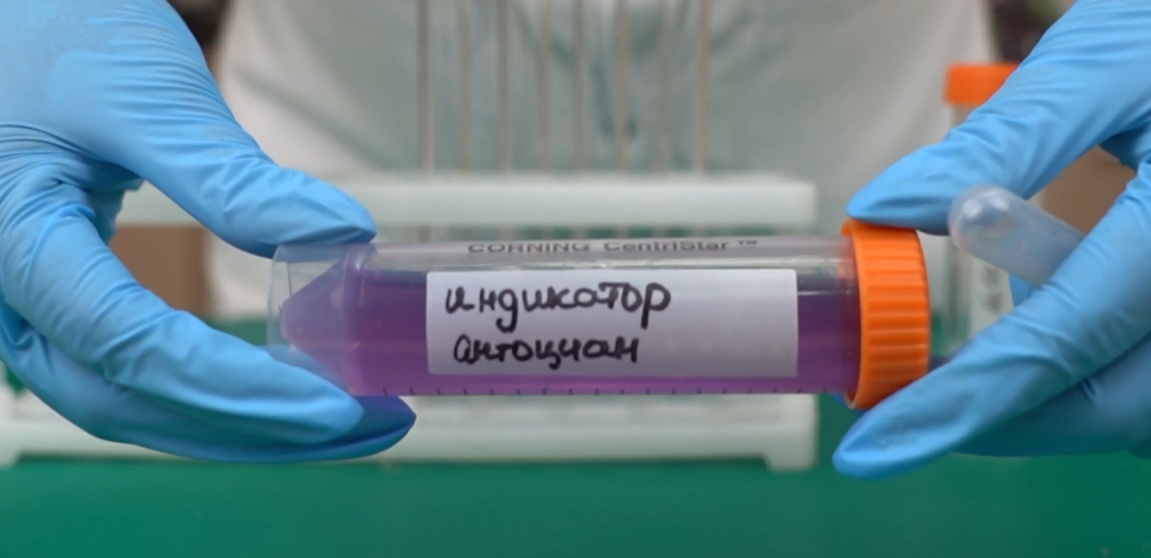
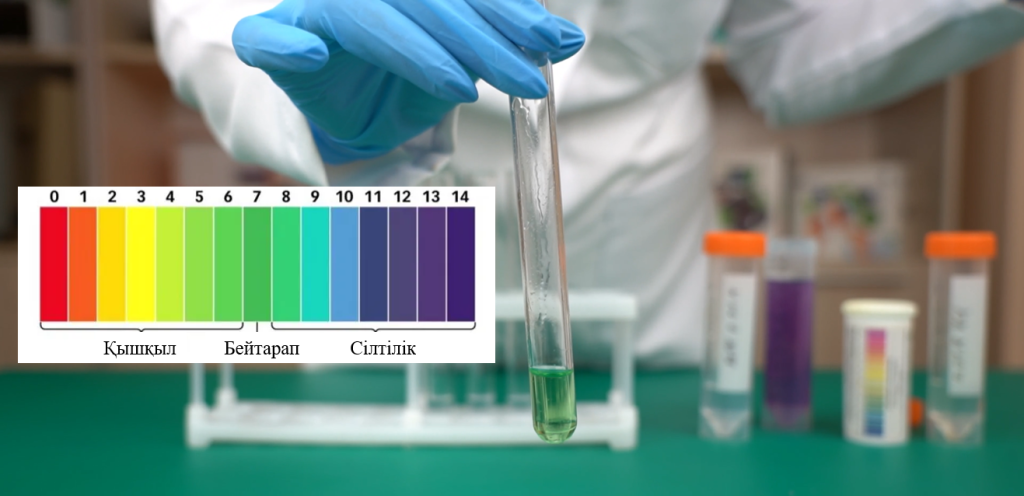
Step 4. Now add a few drops of phenolphthalein or a natural indicator to the same test tube. What changes have taken place this time?
Experiment #2: Interaction with acids
Step 5. Add hydrochloric acid to the test tube with the indicator until the color of the solution changes. What did you notice? Write the reaction equation. What is the name of the observed reaction?
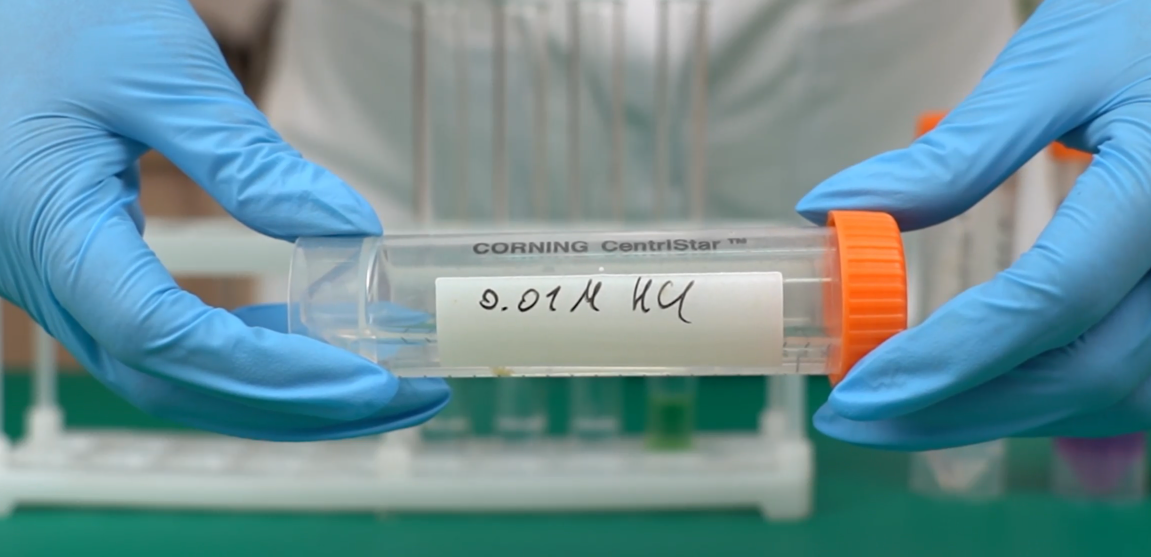
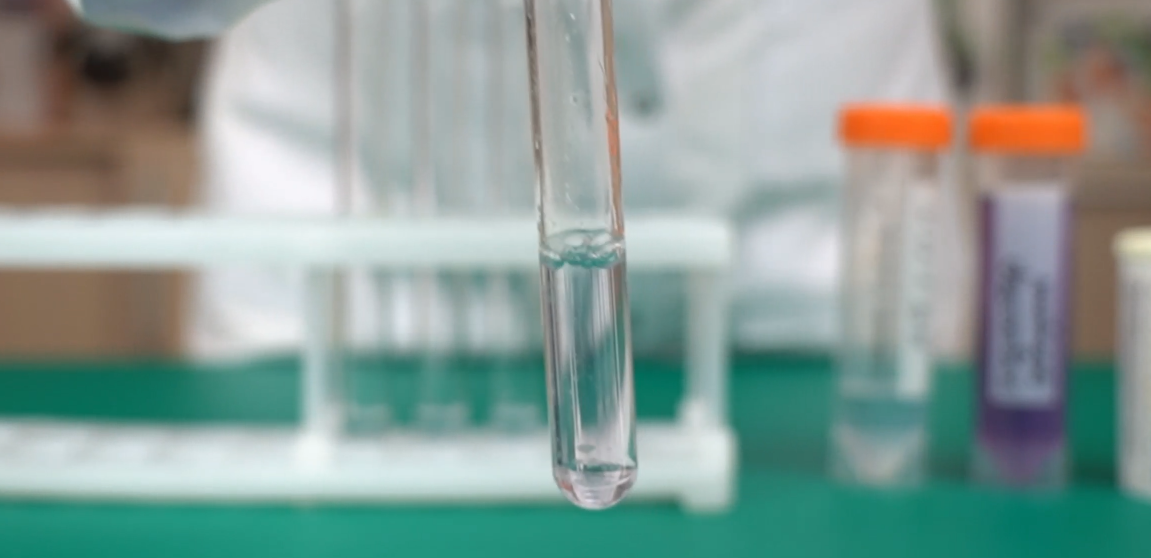
Adding phenolphthalein or litmus to the resulting solution will allow you to observe a change in color, which confirms the formation of salt.
Experiment # 3: Interaction with salts
Step 6. In one of the test tubes with sodium hydroxide, add a few drops of copper sulfate solution, and in the other ferric chloride.


Step 7.What changes have occurred?

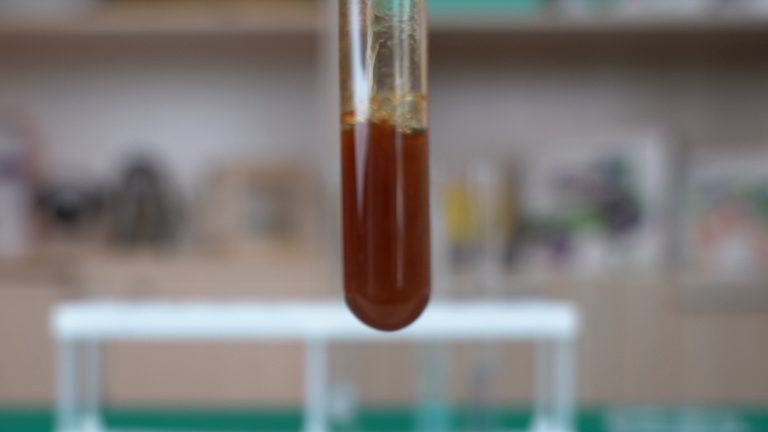
Step 8. Now carefully heat the contents of the test tubes with an alcohol lamp or dry fuel.


Step 9.Observe the changes and write the reaction equation.

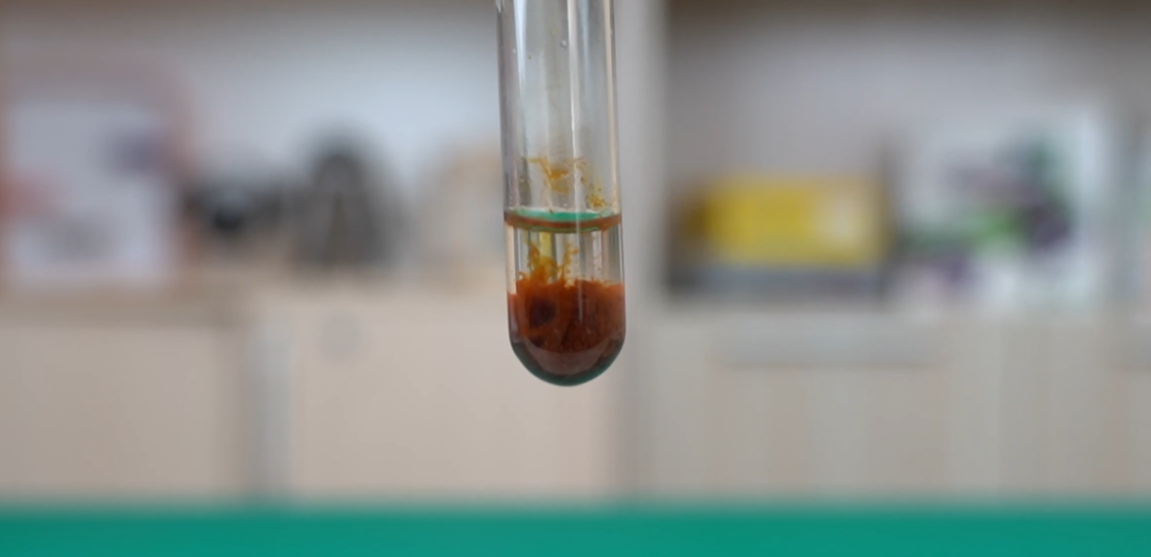
When mixing solutions of caustic soda with solutions of salts of certain metals (for example, copper sulfate, ferric chloride), insoluble hydroxides are formed, precipitating.
Experiment # 4: Interaction with amphoteric metals
Step 10. In the last tube of caustic soda, add pieces of aluminum foil. How is the reaction going? Write the reaction equation.
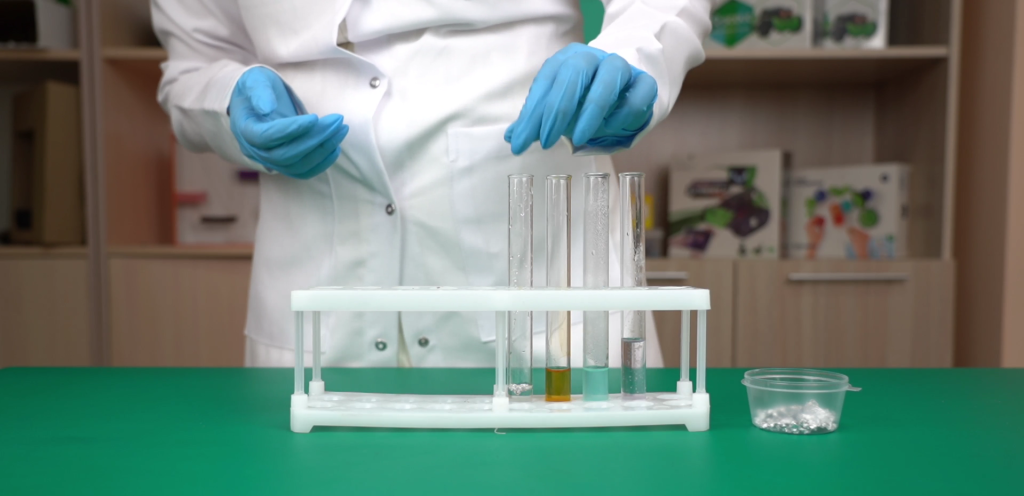
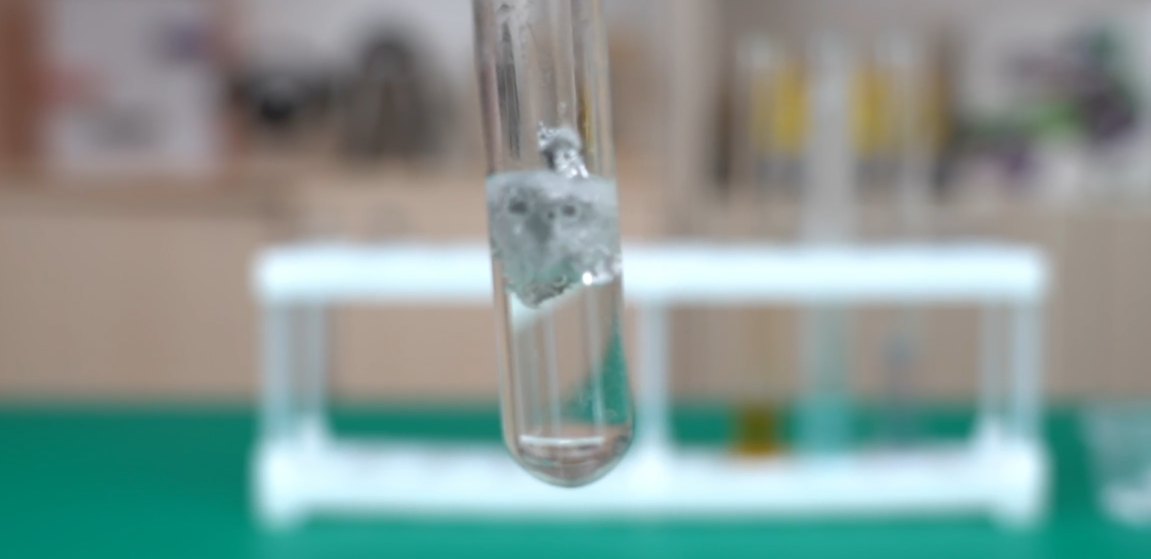
The reaction of aluminum with sodium hydroxide is exothermic, that is, accompanied by the release of heat.
Conclusion
The conducted experiments confirmed the basic chemical properties of the bases. Students observed a change in the color of indicators in an alkaline environment, the neutralization reaction with the formation of salt and water, the formation of precipitation when interacting with salts of certain metals, and an exothermic reaction with aluminum.