Week 1
Goals:
- Develop logical thinking
- Develop the ability to divide objects into groups and sets
Read the safety instructions before you start [ safety insructions ].
Teacher’s Guide:
Tell students about terrestrial and aquatic animals. Give examples using the pictures shown below in the material. After each example, ask students to provide their own examples.
Introduction
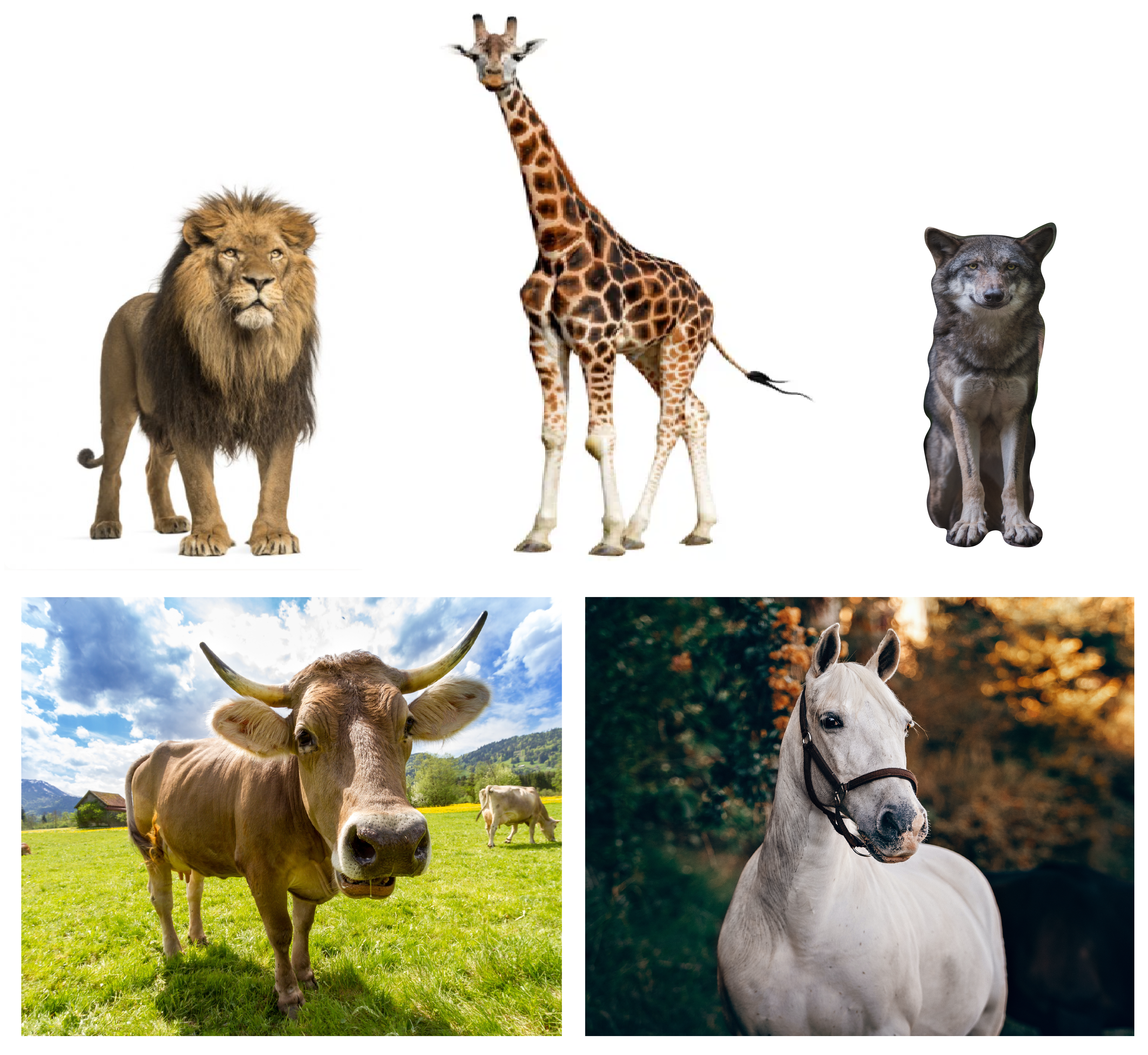
Terrestrial animals are animals that spend most of their lives on the ground. The word “terrestrial” does not mean that the animal does not touch the water at all; it says that the animal cannot survive in the aquatic environment. Examples of land animals are the lion, giraffe, wolf, cow, horse and many others.
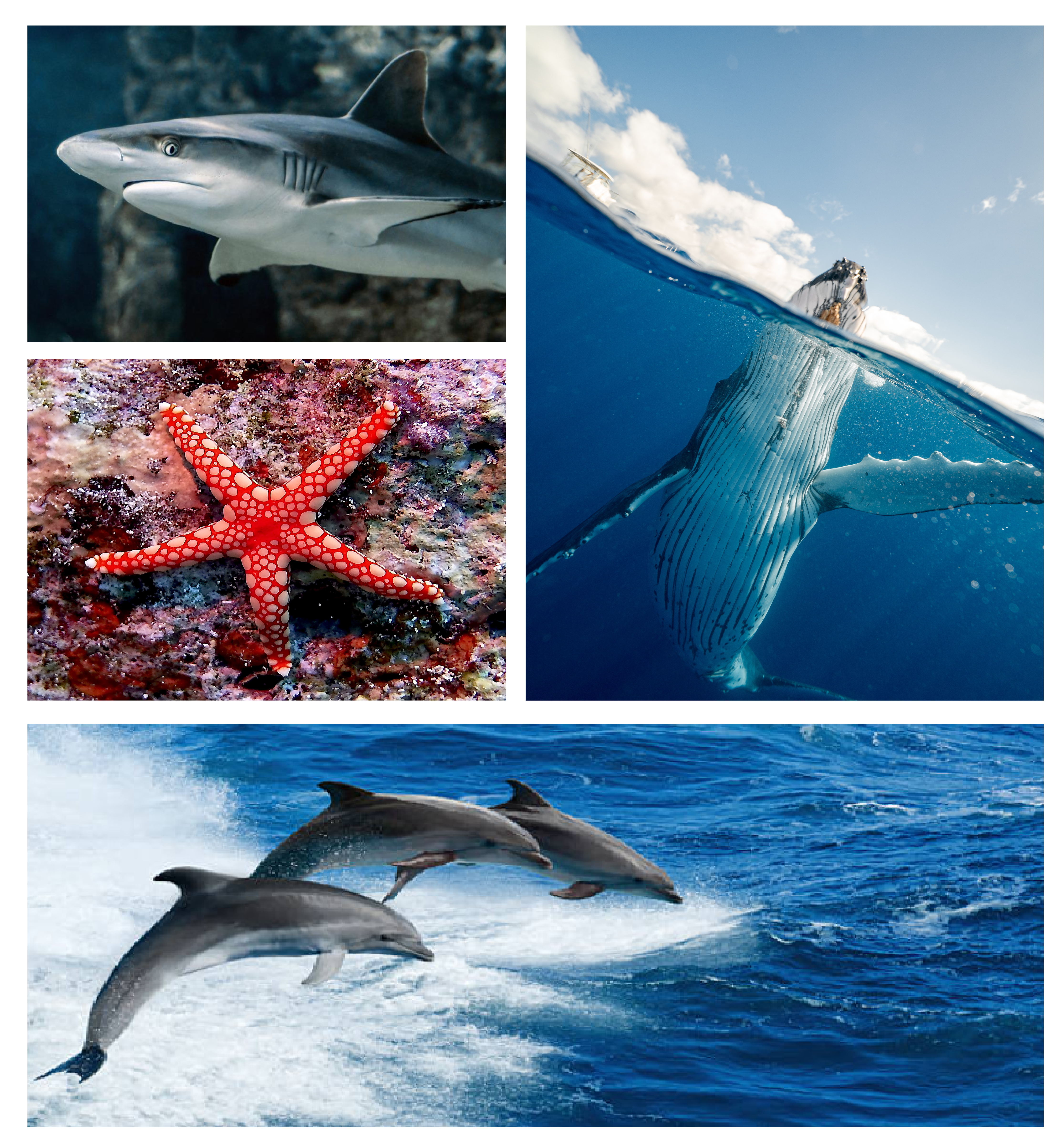
Aquatic animals are animals that live in water for a certain time or all their lives. Aquatic animals can breathe air with the help of special organs (gills), or through the skin. Examples of aquatic animals are sharks, starfish, dolphins, whales, and many others.
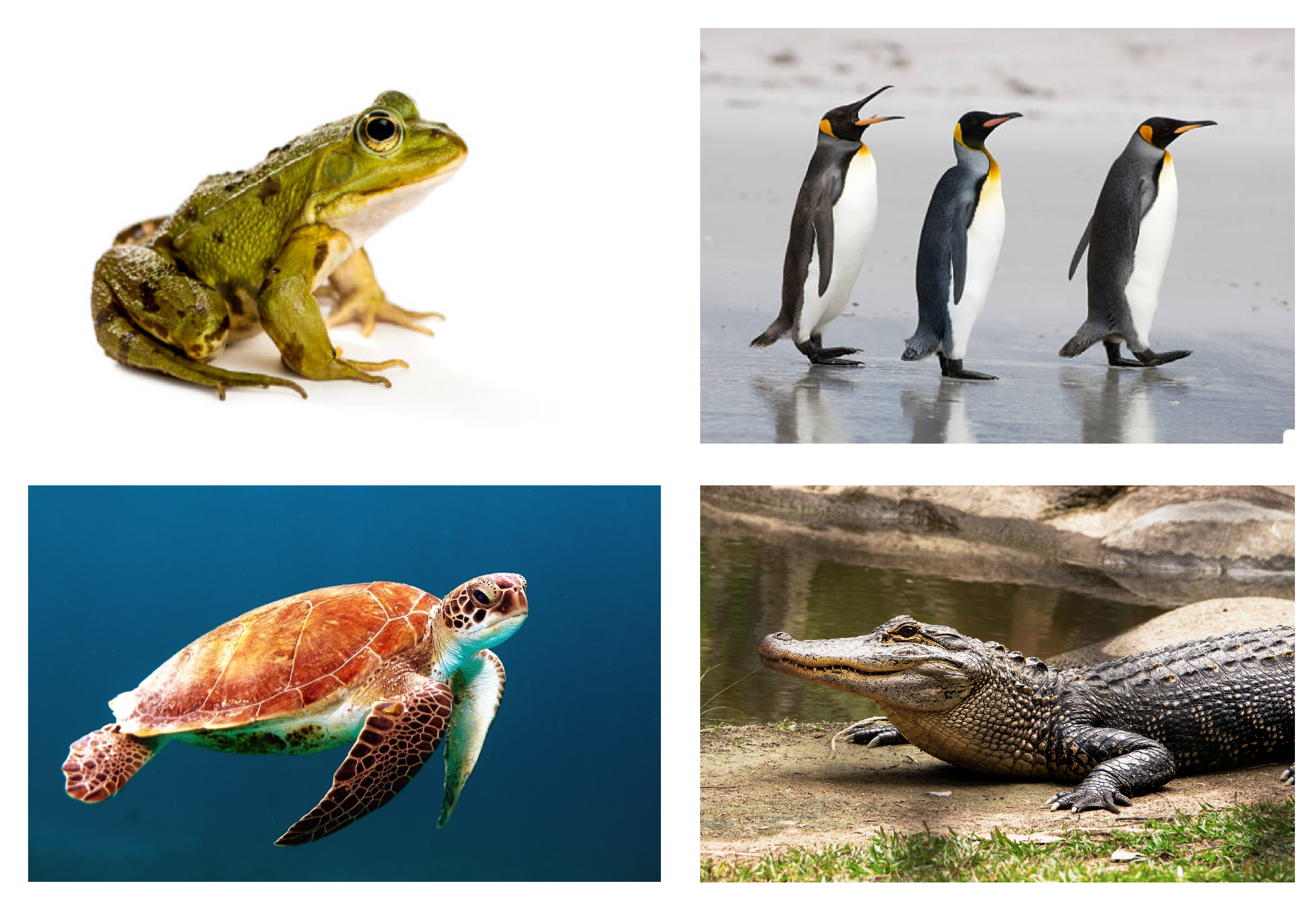
Among aquatic animals, there are those that can move freely in water and on land. Such animals include frogs, penguins, sea turtles and crocodiles.
Project Instructions
Stage 1.
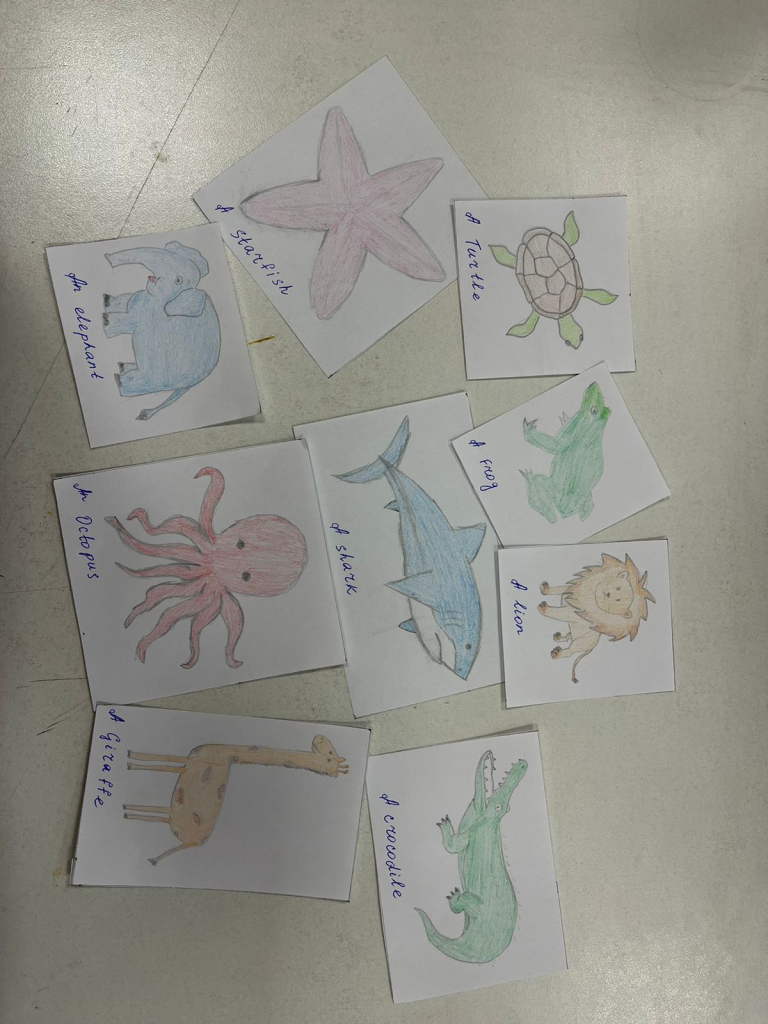
At this stage let the students draw the animals and divide them into groups.
1. Divide A4 paper into small pieces and cut them out (into 10 pieces). Distribute the resulting pieces to groups of students.

2. Have the students draw the animals on the pieces of paper. Divide each student into groups of animals:
- land-dwelling
- Ling under water
- can move freely on land and under water
Each student must draw at least two animals from the same group. Ask the students to label the names of the animals they have drawn. Use colored pencils for coloring.