
Week 2
Kidney diseases
Kidney diseases cover an increasing number of people. This is due to a large number of congenital pathologies and an incorrect lifestyle, as well as a great reluctance to visit doctors at the first symptoms of diseases.
The most common diseases include:
| Disease | Description | Solution |
| Urolithiasis (nephrolithiasis) | formation of stones and sand in the kidneys | Treatment of urolithiasis depends on the composition of the stone, the size and severity of symptoms.If the stone in the ureter and the size allow it to come out on its own, then nothing is required except the use of NSAIDs. The standard of treatment for large stones is percutaneous nephrolithotripsy. In addition, there are several other surgical methods of treatment: ureterorenoscopy, open and laparoscopic operations |
| Pyelonephritis | it is considered one of the inflammatory diseases of the kidneys, often the infection enters the kidney through the blood | Conservative treatment includes antibacterial, infusion-detoxification, anti-inflammatory therapy, physiotherapy, the use of disaggregants and anticoagulants is advisable. Surgical treatment includes organ-preserving and organ-bearing operations. |
| Nephroptosis (wandering kidney) | the disease can be either congenital or acquired. Women are more likely to get sick | Treatment should consist, first of all, in the imposition of a well-adapted renal bandage. The remaining symptoms are treated accordingly to existing seizures.In severe cases, nephropexy is performed (from the Greek nephros – kidney and pexia – fixation, fixation) – a surgical operation to fix the kidney in its physiological state. |
| Kidney failure | a condition when the kidneys partially cease to function and perform their functions, acute and chronic forms are isolated | In case of renal insufficiency, hemosorption is used — a method of extrarenal blood purification based on the use of adsorbents, mainly carbon. The best clinical effect was obtained by combining hemosorption with hemodialysisIn severe cases: kidney transplantation. |
| Glomerulonephritis | another inflammatory disease in which the renal glomeruli and tubules are affected | Radical treatment is impossible, since the process is autoimmune. Outside of exacerbation, in most cases, nephroprotection is indicated |
| Renal colic | With renal colic, first of all, it is necessary to use non-steroidal anti-inflammatory drugs that relieve not only pain, but also inflammation. |
What is an artificial kidney machine or Hemodialysis?
Acute and chronic renal failure are serious pathologies in which organs do not function properly.
Due to a malfunction of the excretory system, stagnation of urine is possible. Without cleansing the body by regular excretion of metabolic products, intoxication begins.
If such a patient is not provided with qualified assistance in a timely manner, poisoning of the body with waste products can lead to death.
Hemodialysis (other-Greek. ‘blood’ and ‘separation’) is a method of extrarenal blood purification in acute and chronic renal failure. During hemodialysis, toxic metabolic products are removed from the body, and violations of water and electrolyte balances are normalized.
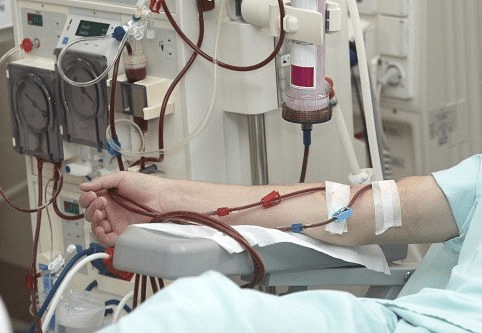
To remove toxins from the blood, engineers have created a medical device called an “artificial kidney”. The weight of stationary equipment is more than 80 kg.
At the heart of the device “artificial kidney” (AIP) are the biological processes of cleansing the body of toxic substances and their excretion, carried out by the kidneys. During hemodialysis, the patient’s blood volume does not change.
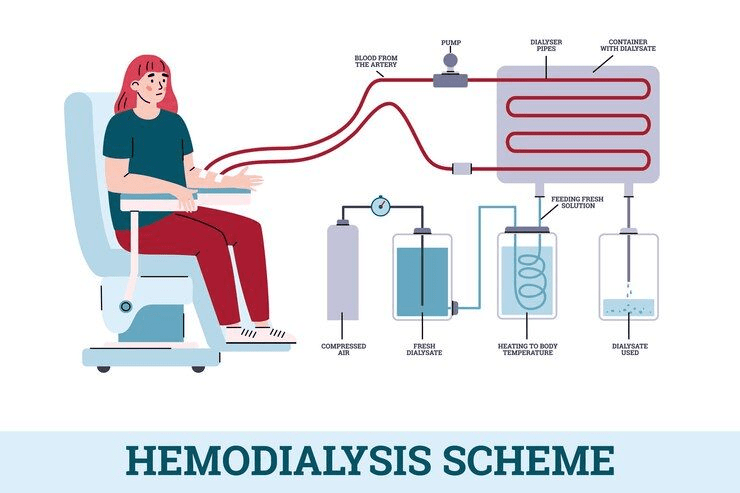
Principle of operation
By design, the “artificial kidney” is a complex device with several flexible tubes and reservoirs.
The device consists of several elements:
– dialyzer;
– perfusion device (a kind of pump);
– device mixing and feeding dialysis solution;
– monitor to monitor the blood circulation rate.
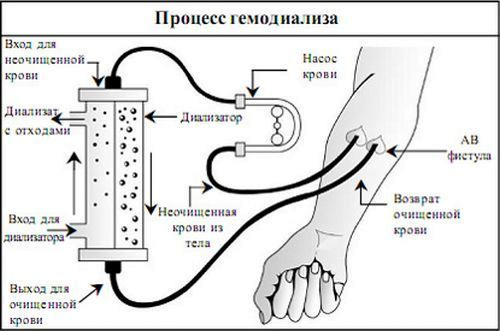
The artificial system works as follows:
1) the patient’s blood pressure and pulse are measured, they learn about the existing complaints;
2) vascular access is connected (via vein and artery);
3) perfusion device stimulates blood flow through the dialyzer;
4) biological fluid is purified from toxins and harmful substances using a solution supplied and mixed by equipment;
5) purified blood is returned to the patient’s body via a catheter.
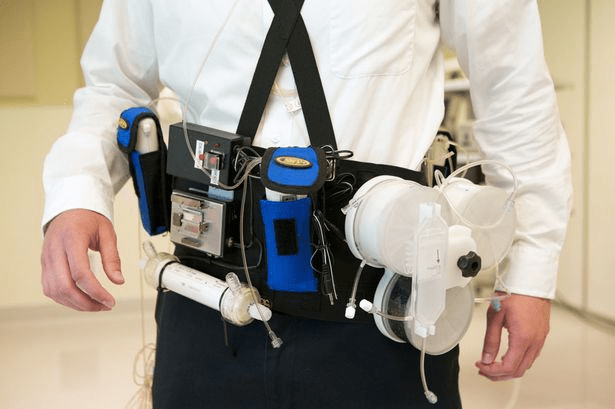
Types of devices
Sources:
2. Петров С. В. Общая хирургия: Учебник для вузов. — 2-е изд. — 2004. — 768 с. — ISBN 5-318-00564-0.
3. Клинические рекомендации ЕАУ по мочекаменной болезни // Европейская ассоциация урологов. — 2016.
5. https://www.nativita.com.ua/index.php/o-nas1/stati/94-beregite-pochki
The practical part
On this project, you will study and independently design an artificial kidney apparatus, in other words, a hemodialysis machine
Step 1. Prepare the layout that you did in the previous lesson.
Stretch the systems from the kidney to the heart and to the right arm (vein-red-thin hose, artery – blue-thick hose)
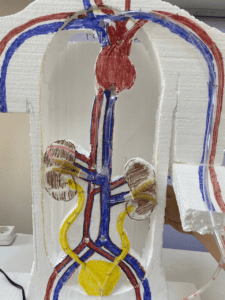
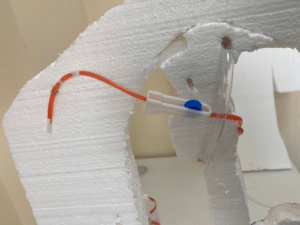
Step 2. A thin vein (red) with the right kidney will remain behind the heart. attach the roller (clip) to this system, close and fasten it with paper clips. (If you want, you can additionally hold it to your left hand-optional)
And the vein from the left kidney passes through the heart to the right arm, as well as the artery (thick silicone hose)
Step 3. Prepare 2 bottles.
1 – cut the neck
2 – make a hole for the hose through (on the bottom and on the lid) – this bottle will be considered as a filter for dialysis.

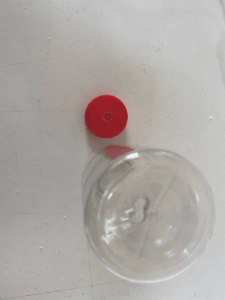
Step 4. Prepare 2 filter papers and put them inside the bottle with a hole

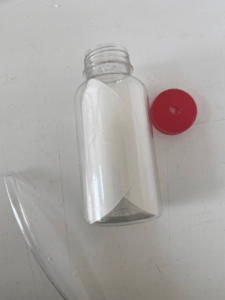
Step 5. Pass an artery (blue) silicone hose through a bottle with a filter and fix the bottle to the foam with hot glue.
And a thin hose (vein-red color) pass on.
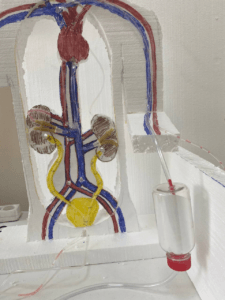
Step 6. Prepare the pumping system.
To do this, connect the red wire of the battery compartment to the red wire of the pump and wrap it with electrical tape
Also connect the black wire of the battery compartment to the black wire of the pump and wrap it with electrical tape
Then put 3 batteries in the battery compartment in the correct direction.
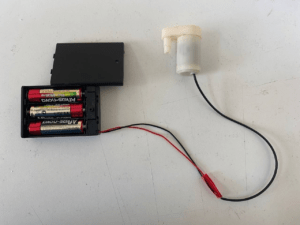
Step 7. Attach a silicone hose to the pump that passes through the filter.
Immerse the pump in the tank.
Then pass a thin system (vein) through the top of the foam, put on an infusion unit and immerse it in a container. It should not reach the middle.
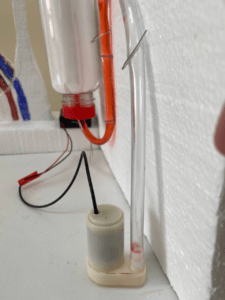
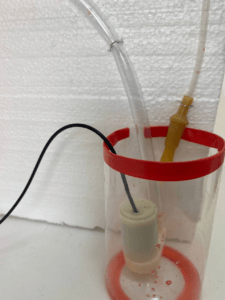
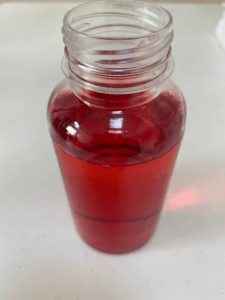
Step 8. Prepare the solution:
water+red dye
Pour into a container with a pump
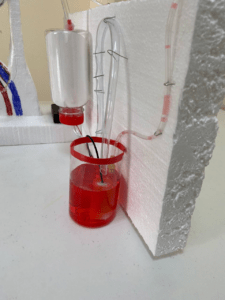
Step 9. Perform a control check of the system.
For this:
1. Open all clips
2. Turn on the pump
3. Check the work of the ureter, the water should drain. Turn off the pump and use the clamp to close the ureter.
4. And turn on the pump again and check the operability of the artificial kidney apparatus.
