
Lesson 1
About the lesson
Goals:
- study water and its properties
- study the effects caused by water
- build a water quality sensor
- assess the condition of water and sources of pollutants
- visualize data using Arduino
Expected results
Students should develop an understanding of:
- finding an idea for a project
- consequences caused by water
- studying literature in this area, working with sources
- creation of project prototypes
- improvement of the prototype based on the data obtained
Interdisciplinary communication
- Physics (water and its types)
- Biology (effect of water on humans)
- Physics (working with electronics, computing)
- Computer science (programming)
Introduction
Water is a unique physical substance that plays a vital role in maintaining life on our planet. It is a necessary element for the life of organisms [1]. It is involved in many biological processes in our body, such as digestion, transport of nutrients and oxygen, and elimination of toxins. Without constant replenishment of water, the human body is unable to function effectively, which makes it a vital resource.
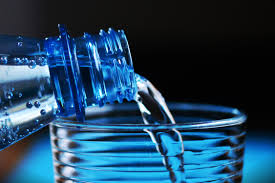
In addition, water plays a key role in maintaining ecosystems and biodiversity. Rivers, lakes and seas are unique habitats for various species of plants and animals, and also provide the necessary conditions for their reproduction and development. Water also serves as a habitat for a variety of microorganisms that play an important role in maintaining the health and ecological balance of our planet. In addition, water is a key element in agriculture and industry. It is used to irrigate crops, cool industrial plants, and produce many products. Efficient use and management of water resources are becoming increasingly important in the face of growing human demand and a changing climate.
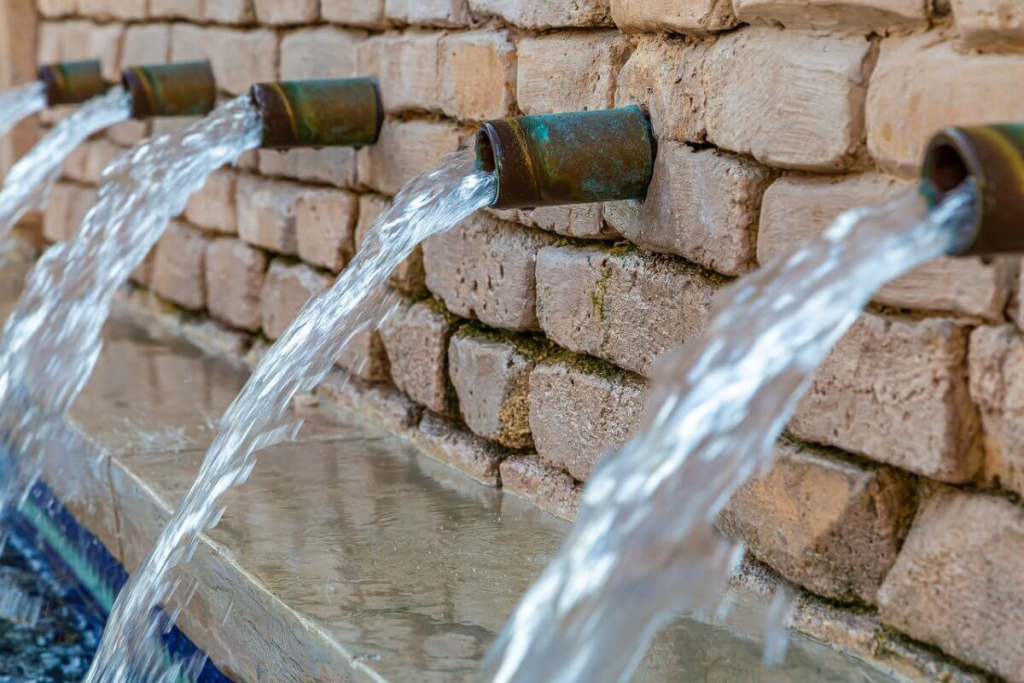
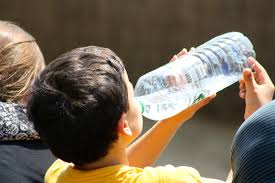
Water quality is a critical factor for human health. The water we eat and use for domestic purposes must meet certain standards to ensure safety and well-being [2]. Water containing contaminants or harmful chemicals can cause serious health problems. Constantly drinking poor quality water can lead to chronic diseases and weaken the immune system, making the body more vulnerable to infections.
That is why our project is aimed at studying the quality of water. The water quality sensor model will measure the electrical conductivity of the water, which in turn greatly affects the water quality. The sensor will be connected to a microcontroller and process water electrical conductivity data. This way we will study the water quality, we will be able to simulate a water conductivity sensor and see the data coming from the sensors.
Resources used:
[1] Water: Essential for your body, https://www.mayoclinichealthsystem.org/hometown-health/speaking-of-health/water-essential-to-your-body#:~:text=Regulates%20body%20temperature,nutrients%20and%20oxygen%20to%20cells
[2] Drinking-water, https://www.who.int/news-room/fact-sheets/detail/drinking-water#:~:text=Water%20and%20health,individuals%20to%20preventable%20health%20risks
Lesson 1. Introduction to the project “Determination of water quality to understand human influence”
Goals:
- study water and its properties
- study the effects caused by water
- build a water quality sensor
- assess the condition of water and sources of pollutants
- visualize data using Arduino
At this stage of the lesson, the nature of water and its conditions, the size of reservoirs and the different composition of water are explained.
Next, we discuss together the influence of water on human activity.
Group work: mini-research work to study the effect of water on humans.
Division into groups:
4 groups for each type of human activity
- transport
- energy source
- recreation and sports
- destructive actions
Each group recalls as many facts as possible about the influence of water on their type of activity.
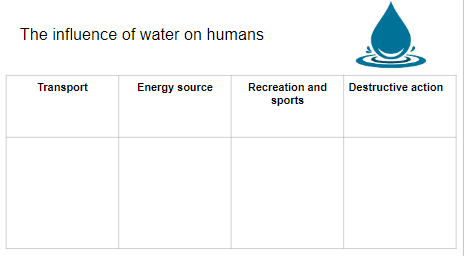
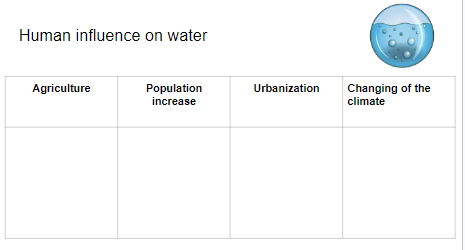
Next, students explore the human influence on water [1]. Mini-research on the topic “Human influence on water.”
We will talk about four main points through which people have the greatest impact on water. After this, the table is filled out and a discussion takes place.
The lesson is summarized and reflection is carried out.