Lesson 2

Lesson 2. Experiment “Testing the electrical conductivity of aqueous solutions” to determine the electrical conductivity of different waters from different sources.

Students are assembling an experimental setup where they will use water as a conductor, thereby clearly seeing the electrical conductivity of water from different sources.

Assembly instructions
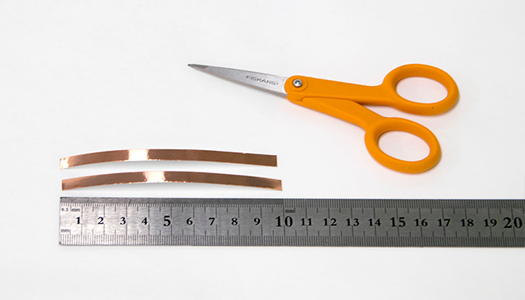
1 | Measure and cut two 10cm long strips of copper tape.
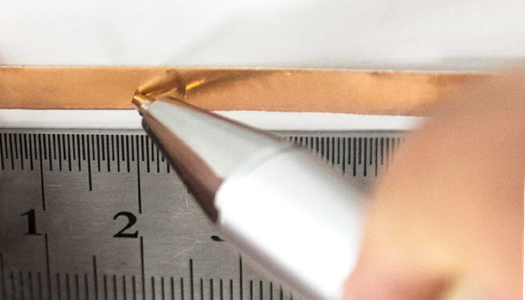
2 | Using a pen, make a mark 2cm from one end on both strips of copper tape.
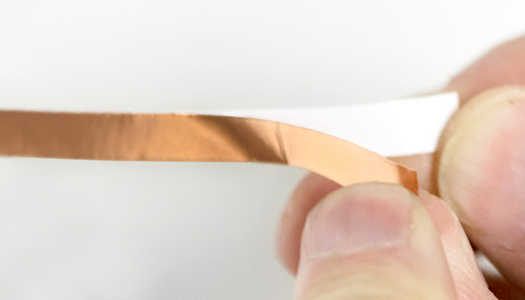
3 | Remove the copper tape from the entire backing.
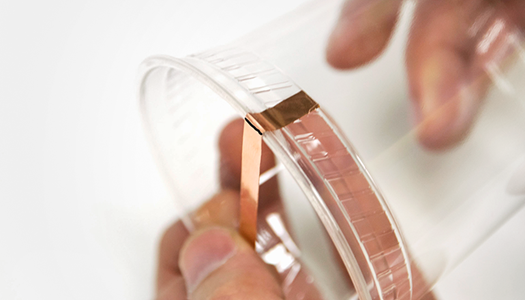
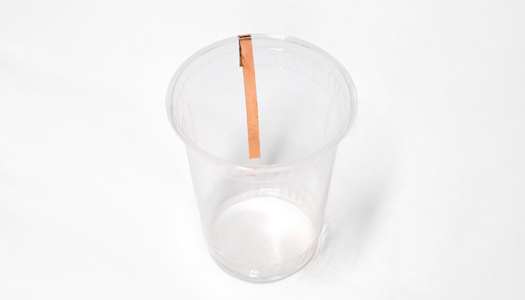
4 | Make sure the glass is clean and dry. Take one of the strips and align the 2cm mark with the edge of the glass so that the longer end fits inside the glass.
5 | Secure the copper tape to the glass.
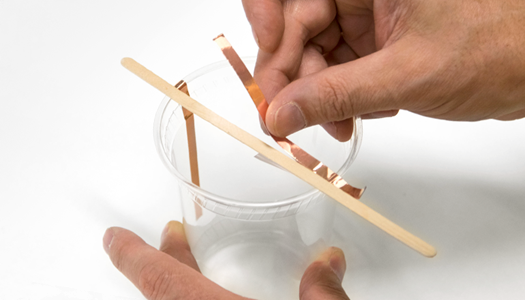
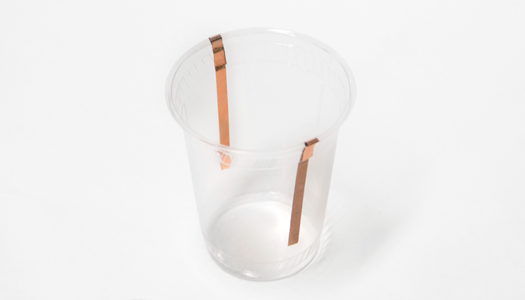
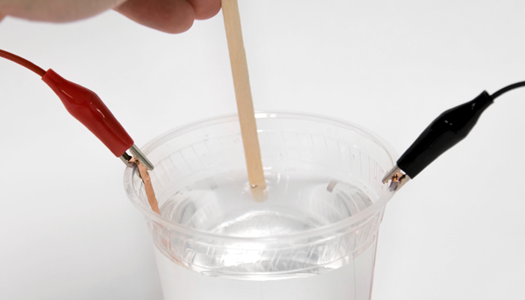
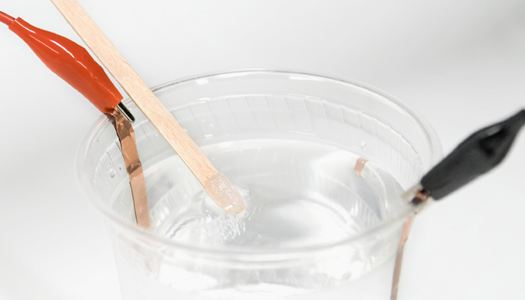
6 | Use a stir stick to align and secure the other strip so that it is directly opposite the other copper strip, and repeat steps 4 and 5 with the second strip.
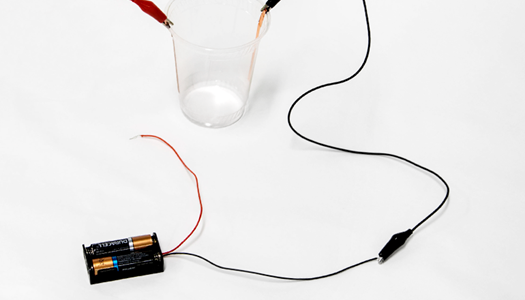
7 | Your glass should now look like the photo above.
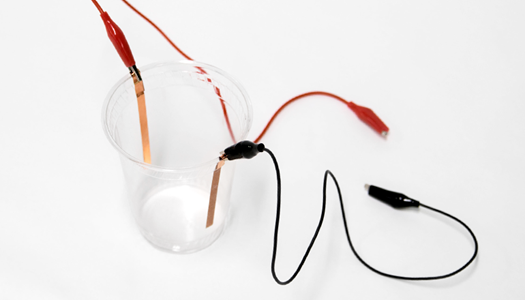
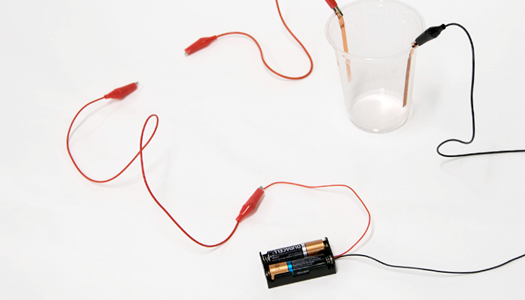
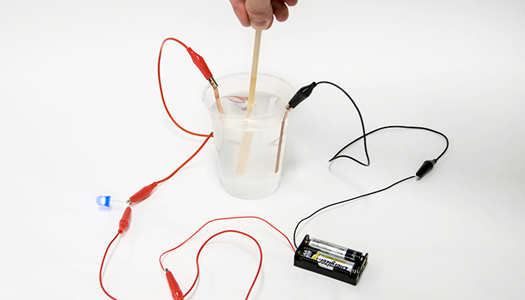
8 | Attach the positive and negative alligator clips of the analog sensor to the copper tape terminals on the cup.
9 | Attach the ground alligator clip to the black (ground) battery cable
10 | Attach another alligator clip to the red wire (power) from the battery.
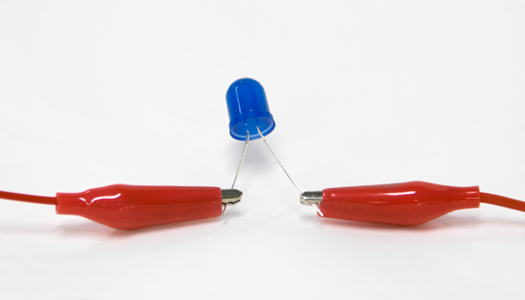
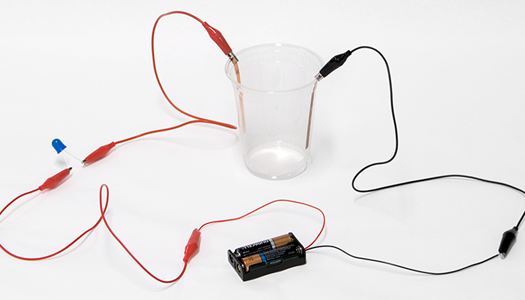
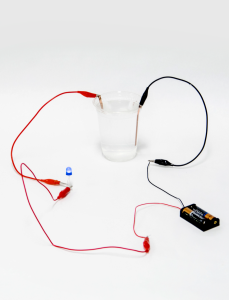
11 | Attach a loose alligator clip from the battery holder to the longer LED leg, and another loose alligator clip from the cup to the other, shorter LED leg.
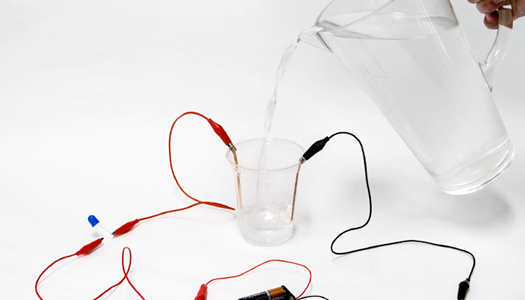
12 | Your installation should now look something like this photo
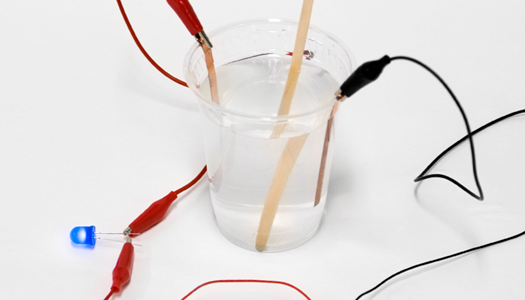
13 | Fill the cup to 2 cm from the edge of the glass. You may see the LED light up slightly if you use tap water.
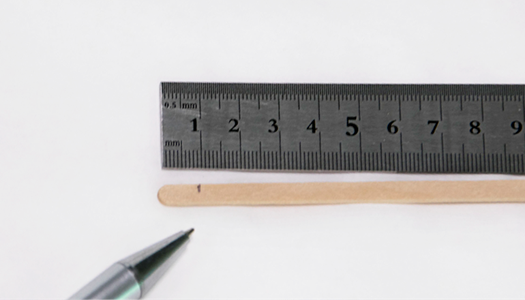
14 | Make a 1cm mark on the stir stick.
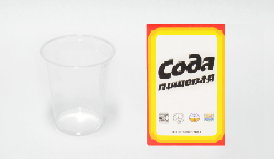
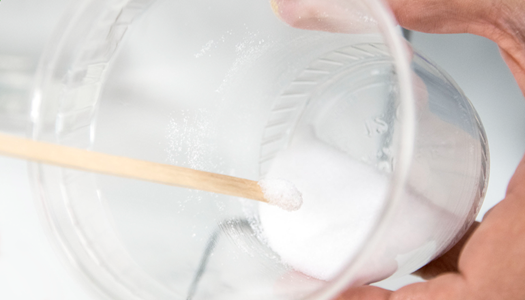
15 | Take a glass and some baking soda. Pour some baking soda into a glass.
16 | Wet the stir stick at the 1cm mark you just made.
17 | Tilt the cup of baking soda and insert the stick until the line made in step 14 is submerged in the water.
18 | Place the stir stick into the water and stir.
19 | Repeat steps 17 and 18 until your LED starts to glow. Be patient, this may take some time.
Great job! You have successfully created an analog conductivity sensor and were able to pass an electrical current through a solution. Now you are ready to make a digital sensor!

During the experiment, it is necessary to record data in a table.

Water sourceHow does the LED light up? rate from 1 to 5 (before adding soda)  How much soda added?